Chamomile is one of the more forgiving herbs to grow at home, which is exactly why it's a popular first choice for anyone starting a small herb garden or a few pots on a balcony. It doesn't ask for much. Get a handful of basics right and it rewards you with flowers within weeks.
What Chamomile Plants Need to Thrive
- Sunlight: at least 4 to 6 hours of direct sun daily; a bright balcony or windowsill works fine
- Soil: well-draining, slightly sandy soil; chamomile dislikes sitting in wet, compacted ground
- Watering: moderate — water when the top inch of soil feels dry, not on a fixed schedule
- Spacing: if growing multiple plants, space them roughly 20–25 cm apart so airflow reaches the base
Chamomile germinates from seed within 7 to 14 days under the right conditions and typically flowers within 6 to 8 weeks of sowing, faster than many people expect from a herb.
Why Is My Chamomile Plant Dying?
This is one of the most common chamomile-related questions, and the answer usually comes down to one of a few things:
- Overwatering — by far the most common cause; chamomile roots rot quickly in soggy soil
- Poor drainage — even correct watering amounts cause problems if the pot or bed doesn't drain well
- Too little sun — leggy, weak stems with few flowers are a classic sign the plant isn't getting enough light
- Root-bound pots — chamomile grown in too small a container for too long stops thriving
The fix is almost always the same: check drainage first, then sunlight, then adjust watering. Chamomile recovers well once the underlying issue is corrected, as long as it's caught before the roots have rotted through.
Recognising Healthy Chamomile Plant Leaves

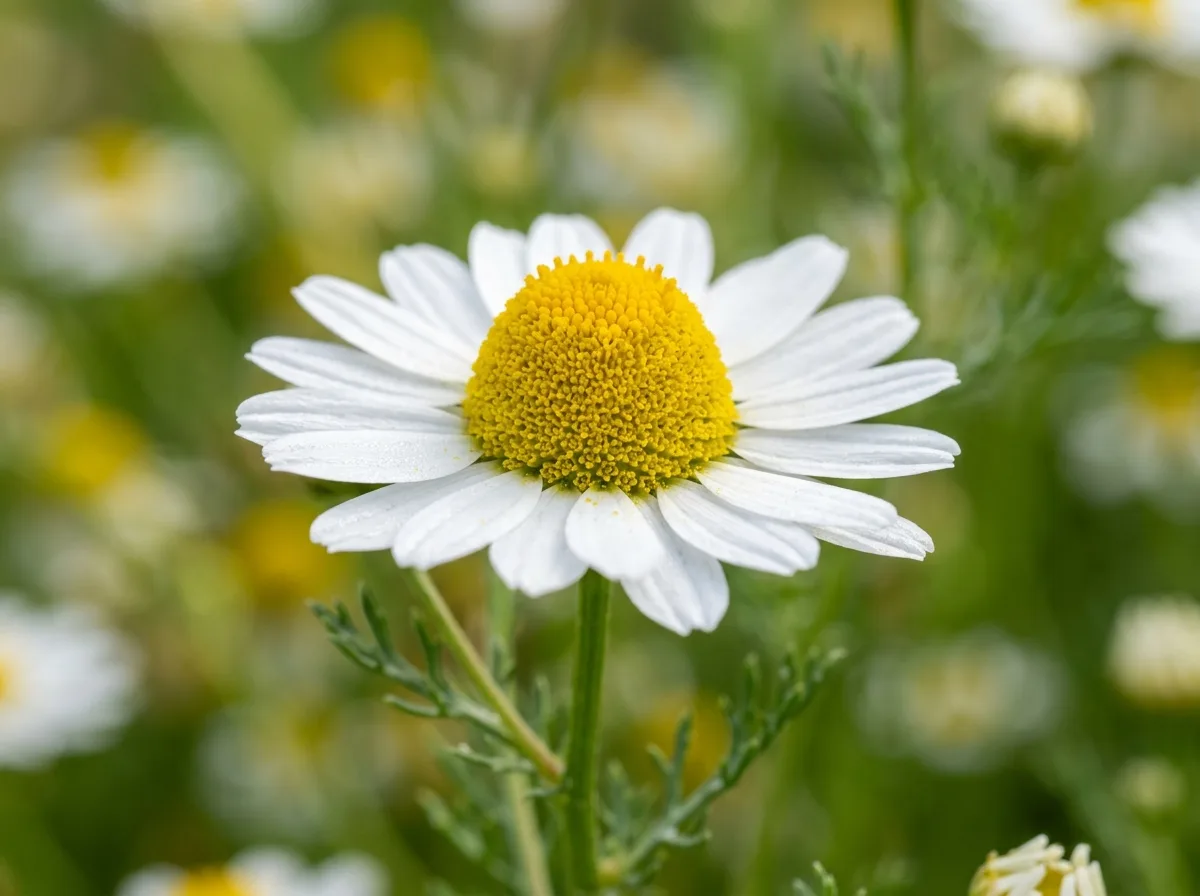
Healthy chamomile plant leaves are thin, feathery, and finely divided, almost fern-like in appearance, a useful way to identify the plant even before it flowers. If the leaves look yellowed, wilted, or sparse, that's usually an early warning sign worth investigating before the plant stops flowering altogether.
When and How to Harvest Chamomile Flowers

Timing matters more than most new growers expect. The right moment to harvest is when the white petals have started to fold back and droop slightly from the yellow centre disc — this is when the essential oil concentration inside the flower is at its highest. Picking too early, while the petals are still fully upright, gives you flowers with noticeably less aroma and strength.
Harvest in the morning after the dew has dried, snip or pinch the flower heads just below the base, and dry them promptly in a single layer somewhere warm, dark, and well-ventilated. Regular harvesting actually encourages the plant to produce more flowers over its growing season, rather than depleting it.
Growing Chamomile in India
Chamomile isn't native to Indian growing conditions, but it adapts reasonably well in regions with a distinct cooler season, since it prefers moderate temperatures over intense heat. Many home growers in India find success growing it as a cool-season crop, sown in autumn for a winter and early-spring bloom, rather than attempting it through peak summer heat.
If Growing Isn't for You
Not everyone has the balcony space, time, or patience for a full growing cycle, and that's a completely reasonable reason to skip straight to the flower itself. We source chamomile tea already harvested at peak potency, dried carefully, and packed fresh — the same flower you'd be growing towards, without the weeks of watering and waiting.