Walk down any supermarket tea aisle and chamomile tea bags are everywhere — dozens of brands, similar-looking boxes, prices ranging from modest to surprisingly high for what's inside. Most shoppers assume a tea bag is a tea bag. It isn't, and the difference matters if you're buying chamomile specifically for its calming effect rather than just a warm, vaguely floral drink.
What's Inside a Typical Chamomile Tea Bag

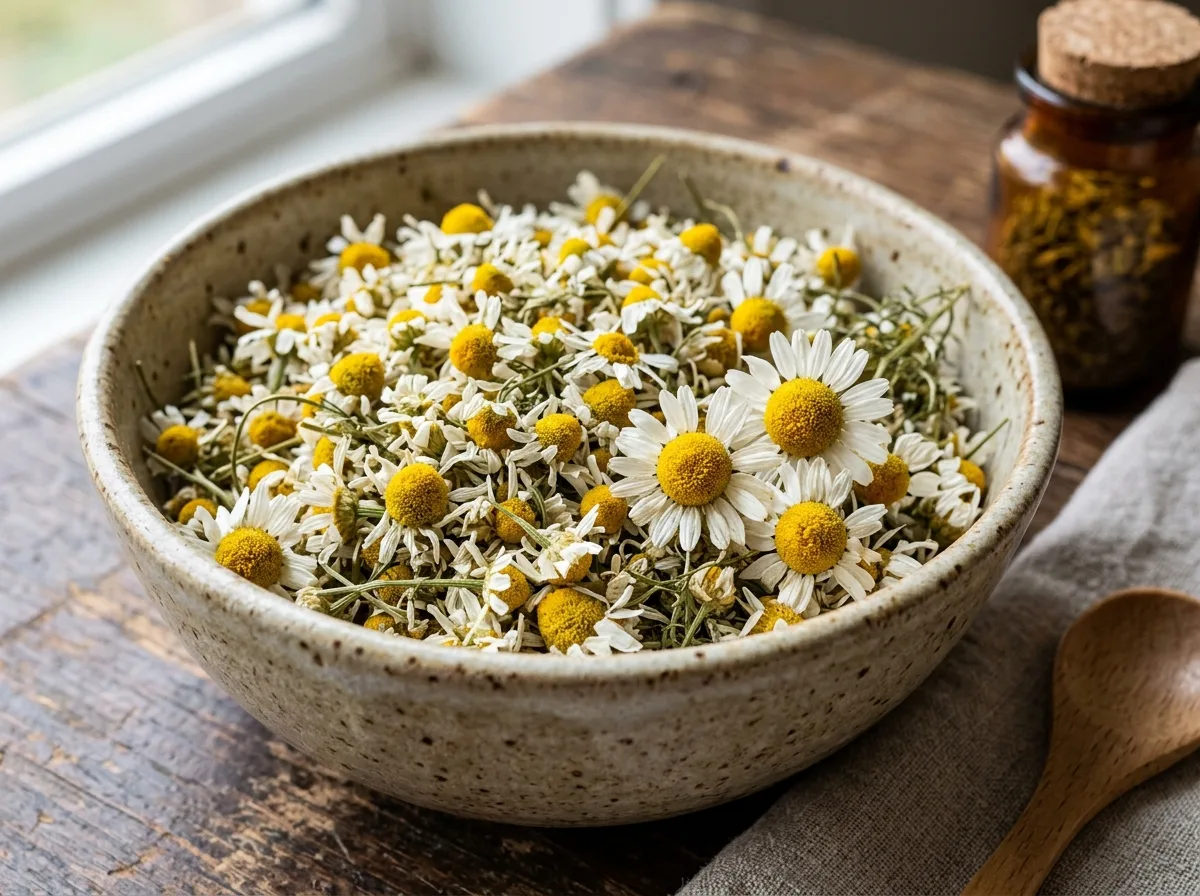
Tea bags are filled with what the industry calls "fannings" or "dust" — the smallest, most broken-down leftovers from processing whole leaves or flowers. This isn't a defect exactly; it's a manufacturing choice, since fine particles steep faster and fit neatly into a small bag. The trade-off is potency. Crushed material has far more surface area exposed to air, which means the essential oils that give chamomile its aroma and calming effect evaporate much faster than they would from an intact flower.
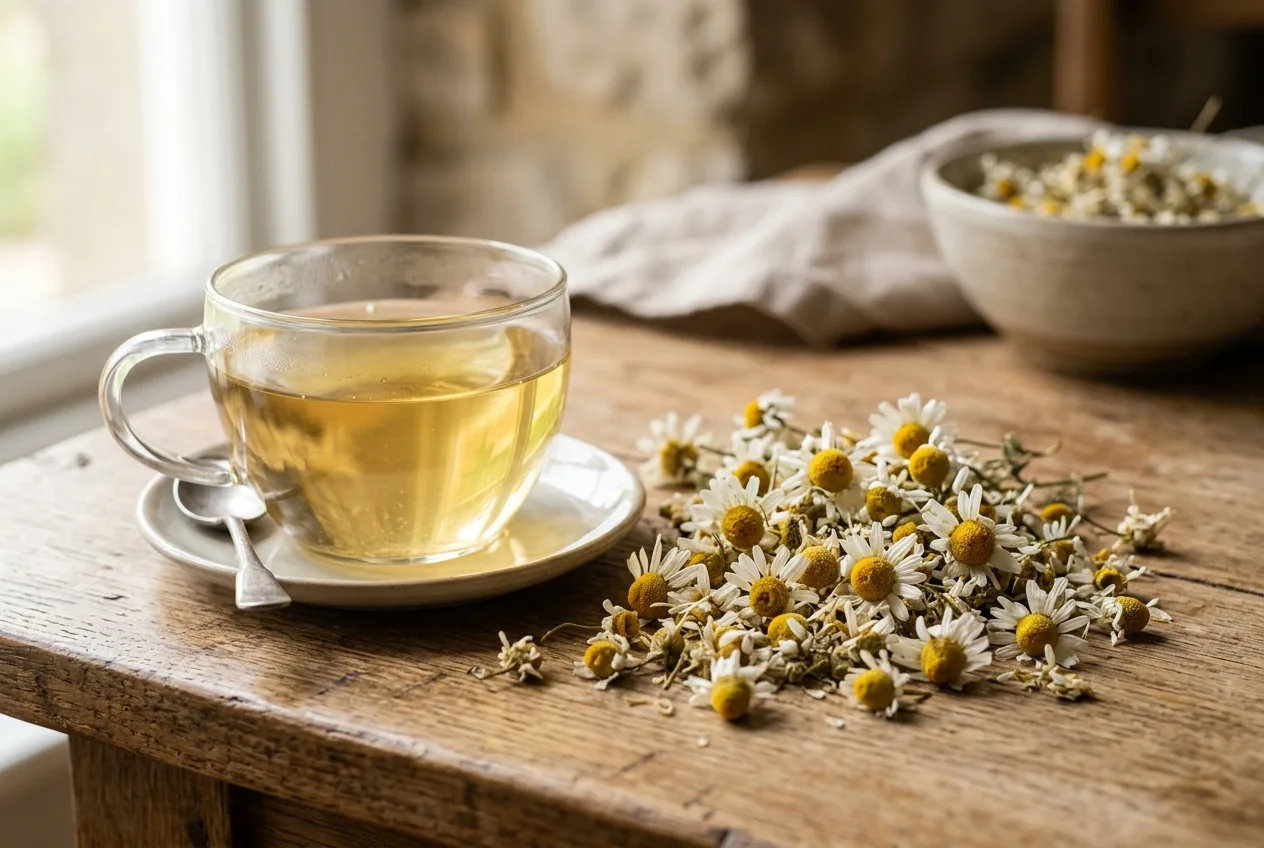
That's why a chamomile tea bag brewed for three minutes often tastes weak and faintly grassy, while a whole flower steeped for six or seven minutes tastes noticeably sweeter and more floral. The bag isn't broken. It's just working with less to begin with.
Paper, Staples, and What to Avoid
A few practical things worth checking on any box of chamomile tea bags before buying:
- Staple-free bags — some cheaper brands still staple the string to the bag, and that staple sits in hot water with every steep
- Unbleached paper — bleached filter paper isn't dangerous in small amounts, but unbleached is the safer, more transparent choice
- No added flavouring listed — pure chamomile shouldn't need "natural flavour" added to taste like chamomile
- A harvest or packed-on date, not just a vague best-before window years out
Chamomile Tea Bags vs Loose Whole Flowers
| Feature | Tea Bags | Loose Whole Flowers |
|---|---|---|
| Steep time | 2–3 minutes | 5–7 minutes |
| Flavour strength | Milder, faster to fade | Fuller, holds longer |
| Convenience | Higher — no strainer needed | Slightly lower — needs an infuser |
| Shelf potency | Weakens faster | Holds strength for months |
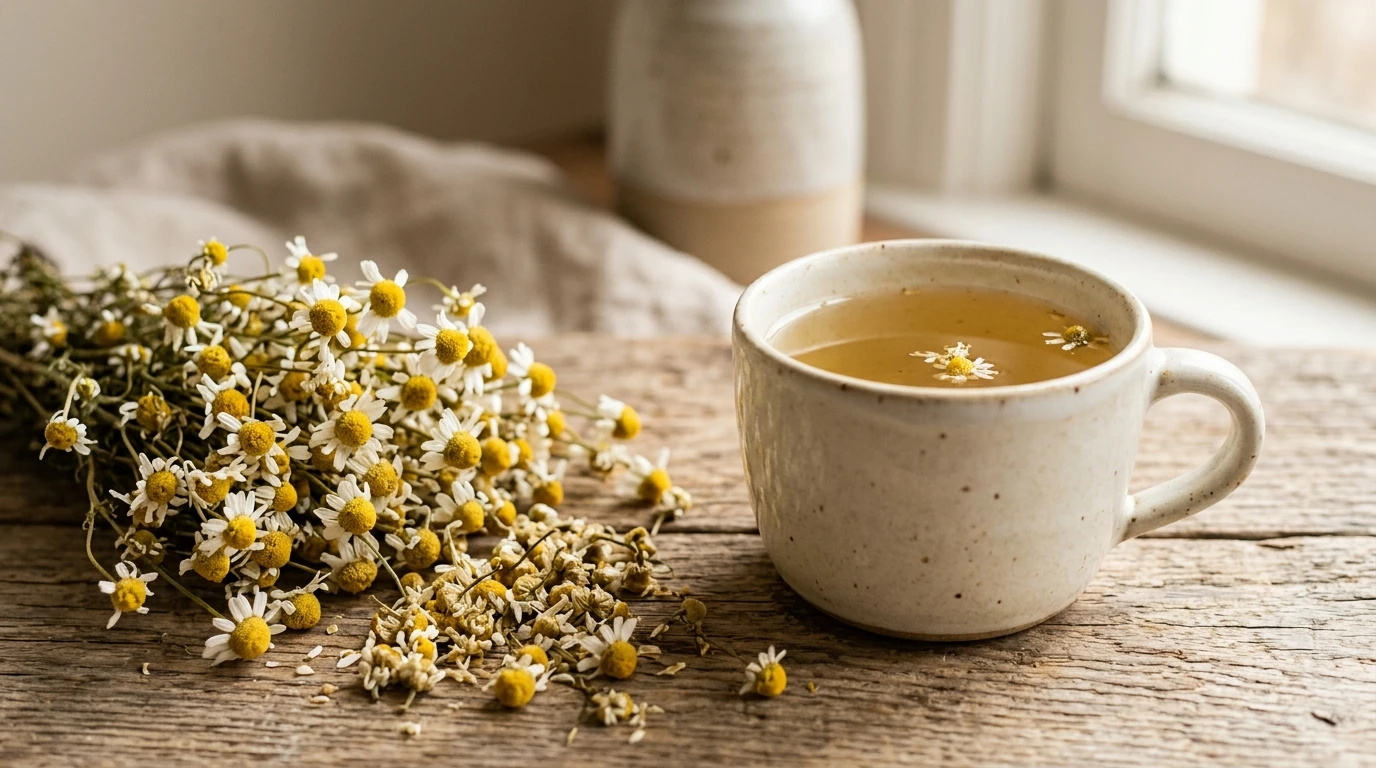
| What you can see | Crushed material, hard to verify | Whole flowers, easy to check quality |
Neither is wrong. If your priority is speed and you're making tea at a desk or on the move, bags are genuinely more convenient. If your priority is the strongest possible calming effect and flavour, whole flowers steeped properly will almost always outperform a bag.
How to Get More Out of a Chamomile Tea Bag
If bags are what you have or prefer, a few adjustments noticeably improve the result:
- Use two bags per cup instead of one if the flavour feels weak
- Steep for the full 5 minutes, not the 2–3 minutes many boxes suggest — chamomile needs longer than black or green tea
- Cover the cup while steeping so the steam and oils don't escape into the air
- Squeeze the bag gently at the end to release the last of the infusion
Why We Chose Whole Flowers Over Bags

We made a deliberate choice not to sell chamomile in tea bags. Once you've tasted the difference between dust-grade chamomile and whole dried flowers steeped properly, it's hard to go back. We sell whole dried chamomile flowers, packed in small batches so what you're steeping is fresh, not sitting in a supply chain for a year before it reaches your cup. If you've been disappointed by bagged chamomile before, that's usually why.
Bags will always have a place for convenience. But if chamomile tea is something you drink regularly for sleep, stress, or a simple evening ritual, it's worth trying the whole-flower version at least once to feel the difference for yourself.