💡 Key Takeaways
- Pure chamomile tea is a caffeine-free herbal infusion made from dried flower heads.
- Chamomile has a long history of traditional use for relaxation and digestive complaints, but the strength of clinical evidence varies by condition.
- Research suggests possible benefits for generalized anxiety symptoms and sleep quality, while evidence for treating insomnia specifically remains inconclusive.
- Chamomile is generally considered safe in food and tea amounts, but allergic reactions and drug interactions are possible.
- Pregnancy and breastfeeding are areas where safety data are limited, so extra caution is appropriate.
- The best way to use chamomile tea is as a beverage that fits into a balanced routine, not as a substitute for diagnosis or treatment.
What is chamomile tea?
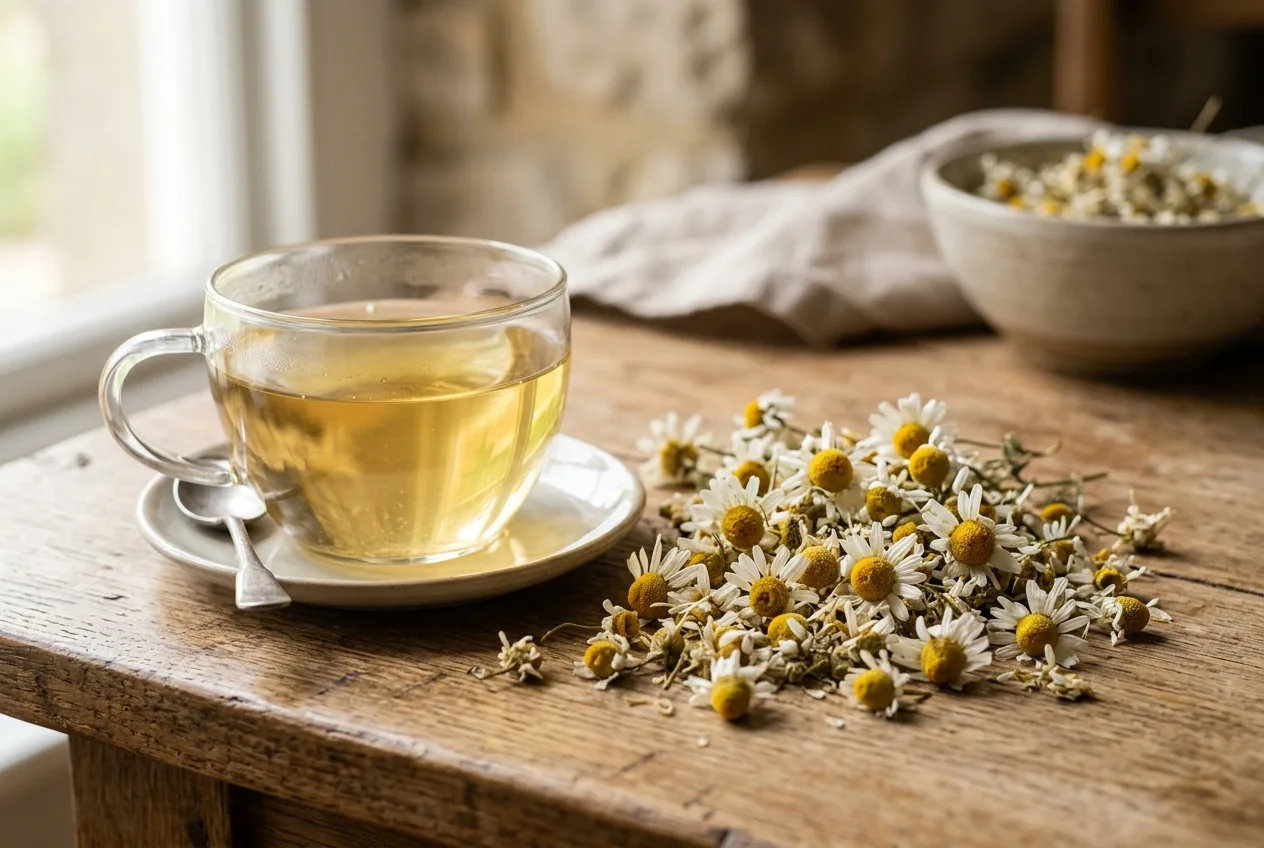
Chamomile tea is an herbal infusion made from the dried flower heads of chamomile plants. Two species are commonly discussed: German chamomile (Matricaria recutita, also called Matricaria chamomilla) and Roman chamomile (Chamaemelum nobile). The National Center for Complementary and Integrative Health (NCCIH) notes that its consumer fact sheet focuses on German chamomile. Chamomile has been used in traditional medicine for centuries and is now sold as tea, extracts, capsules, topical preparations, and products combined with other herbs. [1]
That variety matters when reading health claims. A cup of chamomile tea is not automatically equivalent to a concentrated chamomile extract used in a clinical trial. Studies may use standardized extracts, different doses, different preparations, or combinations of herbs. Results from one form cannot automatically be transferred to every chamomile tea product.
For most people, chamomile tea is simply a warm, naturally caffeine-free beverage with a mild floral taste. The strongest reason to drink it may be practical rather than medical: it can be an easy way to build a relaxing evening routine without adding caffeine.
What are the main benefits and uses of chamomile tea?
Chamomile is often promoted for many different health benefits, but the evidence is not equally strong across all of them. NCCIH says studies have not produced enough reliable evidence to rate chamomile as clinically useful for a broad range of specific conditions. It also notes that some studies involve multi-herb products, making it difficult to isolate chamomile's contribution. [1]
A better way to evaluate chamomile tea is to separate established everyday use from areas where research is still preliminary.
1. Relaxation and winding down
One of the most common reasons people choose chamomile tea is its place in a calming evening routine. That does not prove that the tea itself acts as a sedative, but the ritual can still be useful. A warm, caffeine-free drink can fit naturally into a wind-down routine, especially when it replaces coffee, energy drinks, or caffeinated tea later in the day.
Research on chamomile and anxiety is more interesting than research on insomnia, but it still needs careful interpretation. NCCIH describes studies of chamomile extract for generalized anxiety disorder as preliminary and not conclusive. A 2024 systematic review of clinical trials found potentially beneficial effects across several studies, while also noting uncertainty about mechanisms and study quality. [2][3]
For that reason, it is more accurate to say chamomile may support relaxation for some people than to promise that it will reduce anxiety or treat an anxiety disorder.
2. Sleep and bedtime routine (learn whether chamomile tea makes you sleepy and see what chamomile tea is good for)s
Chamomile is one of the best-known herbal drinks associated with bedtime, but the evidence does not justify calling it a proven insomnia treatment. NCCIH states that there is no conclusive evidence from clinical trials that chamomile helps insomnia. A 2019 systematic review and meta-analysis found a significant improvement in sleep quality in its pooled analysis, but there was only one randomized trial assessing insomnia, and that trial did not show a significant improvement in insomnia severity. [1][4]
That distinction is important. Sleep quality and insomnia are related but not identical outcomes. Someone may find a cup of chamomile helpful as part of a relaxing routine even when chamomile has not been shown to treat chronic insomnia.
If persistent trouble falling asleep or staying asleep is affecting daily life, the more useful next step is to address possible causes and seek appropriate medical guidance rather than relying on tea alone.
3. Digestive comfort
Chamomile has a long history of traditional use for digestive complaints, including mild gastrointestinal discomfort. European herbal monographs have recognized traditional use of Roman chamomile for mild, spasmodic gastrointestinal complaints such as bloating and flatulence. However, the European Medicines Agency also distinguishes traditional use from well-established medicinal efficacy. [5][6]
Research on digestion is complicated because many clinical studies use combination herbal products rather than chamomile alone. NCCIH specifically notes that some studies involving children with diarrhea or infant colic used products containing several herbs, while chamomile by itself has not been shown to be helpful for those conditions. [1]
So a reasonable claim is that chamomile tea has traditional digestive use and may feel soothing for some people. A stronger claim—that chamomile tea treats reflux, ulcers, irritable bowel syndrome, gastritis, or another diagnosed condition—would go beyond the evidence available for ordinary tea.
4. A caffeine-free alternative
For people trying to reduce caffeine, pure chamomile tea is a straightforward substitution because it is an herbal infusion made from flowers rather than tea leaves (Camellia sinensis). Check the ingredient list to ensure it's not blended with caffeinated teas.
5. A simple hydration habit
Chamomile tea can also be part of ordinary fluid intake. Plain chamomile is a zero-calorie, zero-sugar beverage that provides soothing warmth throughout the day without caffeine jitters.
What does the research say about chamomile?
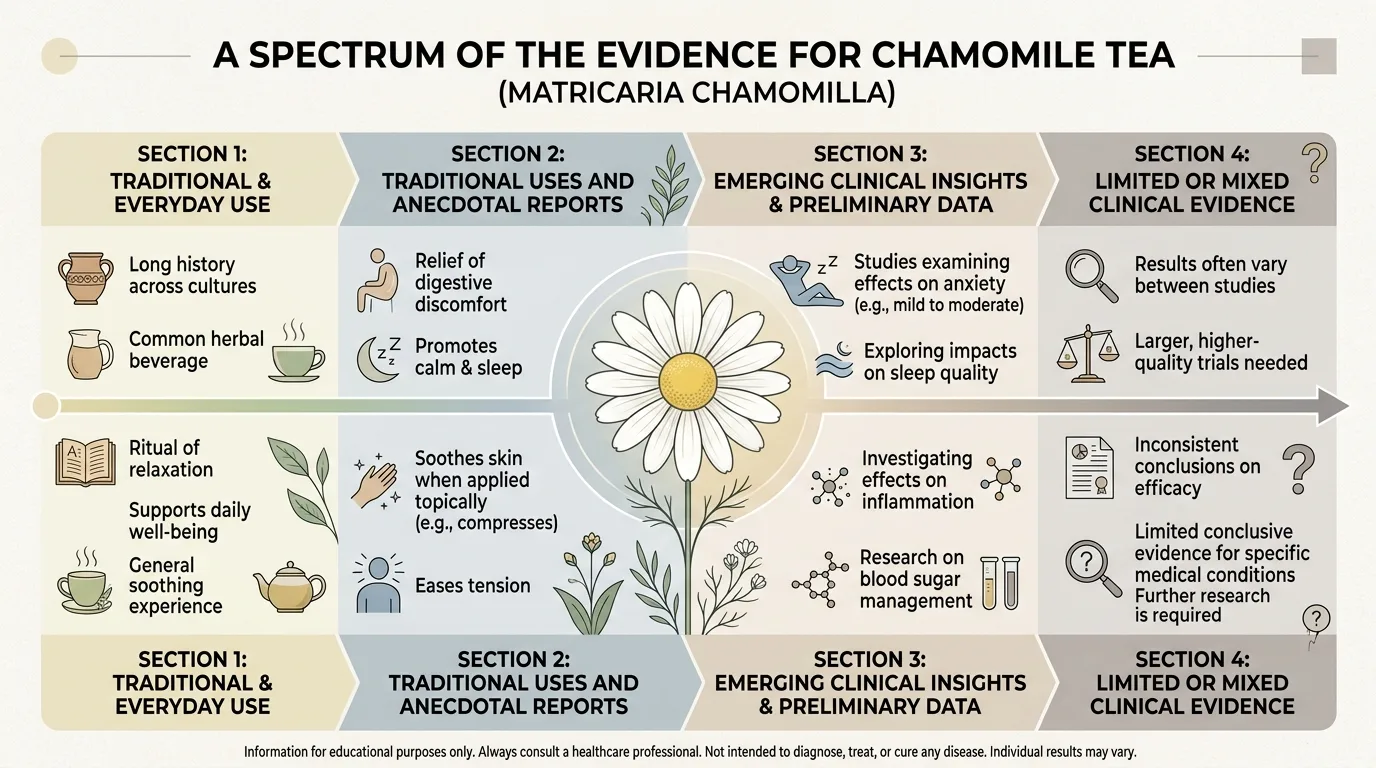
The most useful way to read chamomile research is to look at the preparation studied, the condition being measured, and the outcome researchers actually found.
A 2019 systematic review and meta-analysis included 12 randomized or quasi-randomized trials. It found a statistically significant improvement in sleep quality, but the evidence for insomnia itself was much thinner, with only one relevant trial and no significant improvement in insomnia severity. For anxiety, the pooled analysis found no significant effect for state anxiety, while some generalized anxiety disorder outcomes improved. The authors concluded that larger trials were needed. [4]
A 2024 systematic review of 10 clinical trials of oral chamomile for anxiety reported that most included studies found a reduction in anxiety measures, but the review also acknowledged uncertainty about the mechanism and the need for stronger evidence. NCCIH's current summary is more cautious: preliminary research suggests chamomile extract may help generalized anxiety disorder, but findings are not conclusive. [2][3]
The practical conclusion is not that "chamomile works" or "chamomile does nothing." The evidence is condition-specific, preparation-specific, and still developing. Tea itself may contain less or different quantities of active compounds than the extracts used in some trials, so consumers should be careful about translating supplement research directly to a cup of tea.
How to prepare chamomile tea
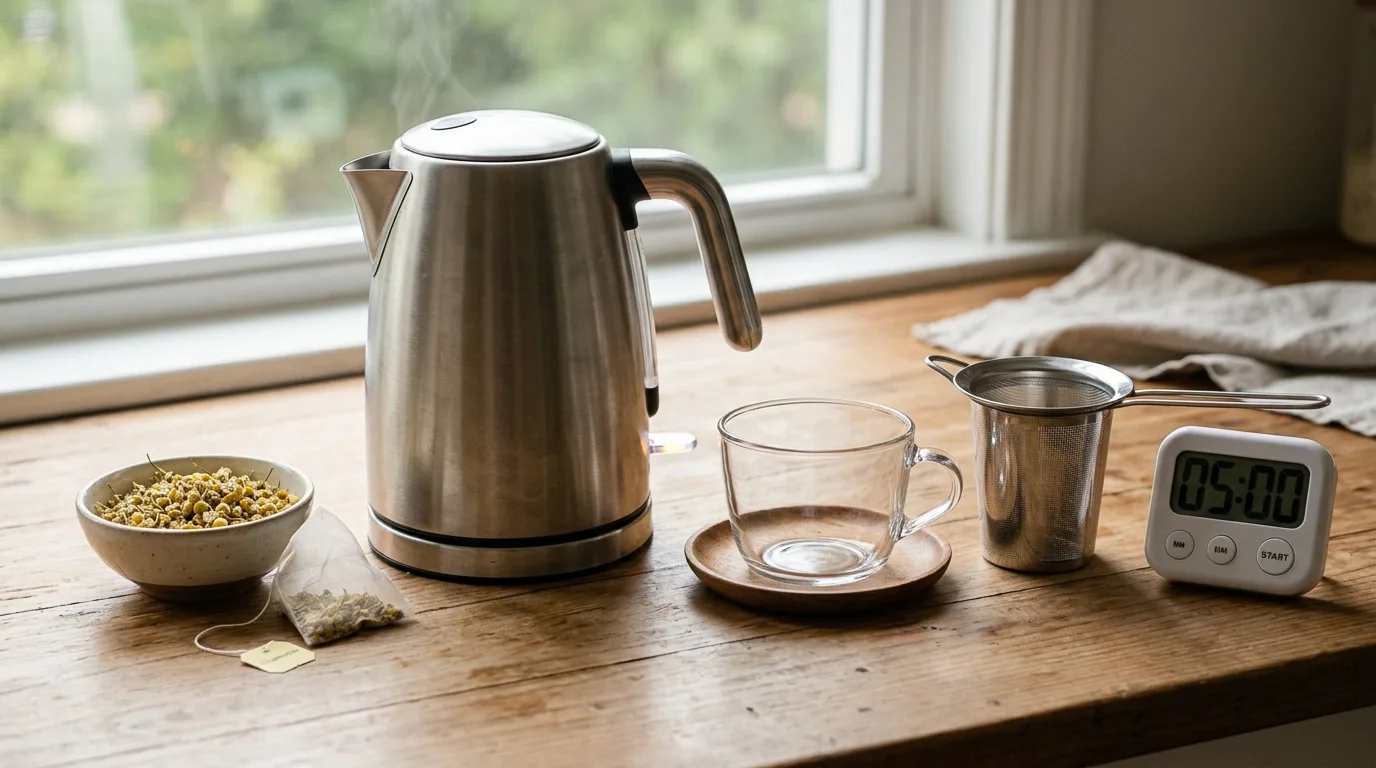
There is no need to make chamomile tea complicated. A good preparation method is mainly about using a product you trust, following its instructions, and adjusting strength to taste.
For tea bags, place the bag in a mug and add hot water, then steep for the time recommended on the package. For loose dried chamomile flowers, use the amount recommended by the supplier and strain the flowers before drinking. Some people prefer a lighter infusion; others prefer a stronger floral taste.
Practical Steeping Tips:
- Drink it plain if the goal is a simple, low-sugar beverage.
- Add a small amount of honey only if preferred; added sweeteners change calorie and sugar content.
- Add lemon for flavor rather than for a promised "detox" effect.
- For an evening routine, choose a pure chamomile product rather than a blend containing caffeine.
- Let the tea cool to a comfortable drinking temperature rather than drinking it scalding hot.
How to choose a chamomile tea
The best chamomile tea depends less on a trendy claim and more on what is actually in the packet.
Look for a product that clearly identifies chamomile as an ingredient and states whether it is a single-herb tea or a blend. If caffeine matters, confirm that there are no tea leaves or other caffeinated ingredients. For people with allergies or medication concerns, a short and transparent ingredient list is often easier to evaluate than a complex "wellness" blend.
For commercial tea products, a useful quality framework is:
- clear ingredient labeling;
- realistic preparation instructions;
- traceable manufacturer information;
- no unsupported disease-treatment claims;
- transparent information about blends and added ingredients. For a current product example, see pure chamomile tea.
The product that best fits the intended use is usually better than the one with the longest list of health promises. You can also view the chamomile tea product page for the current pack information.
Is chamomile tea safe?
For most adults, chamomile is considered likely to be safe when consumed orally in amounts commonly found in foods and teas. NCCIH reports that side effects are uncommon, but they can include nausea, dizziness, and allergic reactions. Rare but serious hypersensitivity reactions, including anaphylaxis, have been reported. [1]

Who should be cautious with chamomile tea?
⚠️ Ragweed & Plant Allergies
People who are allergic to ragweed, chrysanthemums, marigolds, daisies, or related plants may be more likely to react to chamomile. Anyone developing swelling, wheezing, or hives should seek urgent care. [1]
💊 Medication Interactions
NCCIH notes that interactions involving chamomile and warfarin have been reported, with theoretical concerns for sedatives, oral contraceptives, and liver-metabolized drugs. [1]
🤰 Pregnancy & Breastfeeding
There is limited reliable safety data regarding therapeutic or concentrated chamomile during pregnancy or breastfeeding. Discuss regular use with a clinician. [1]
Related Reading & Topic Guides
These existing guides cover narrower parts of the topic and are useful next reads:
- • what chamomile flower is — how the flower is used and what quality looks like
- • how chamomile tea bags compare with whole flowers — what to check when choosing tea bags
- • how to use and store dried chamomile flowers — practical storage and brewing guidance
Conclusion
Chamomile tea is best understood as a caffeine-free herbal beverage with a long tradition of use and an evidence base that is promising in some areas but far from definitive. Research suggests possible benefits related to generalized anxiety symptoms and sleep quality, while evidence for treating insomnia and many other conditions remains insufficient or inconclusive. [1][2][4]
For everyday drinking, the practical approach is straightforward: choose a clearly labeled product, check whether it is pure chamomile or a blend, prepare it according to package instructions, and treat it as part of a healthy routine rather than a cure-all. For product options, see Chamomile Tea Co..
That balance—useful beverage, possible supportive role, but not a replacement for medical care—is the most accurate way to think about chamomile tea.
🔬 Scientific Sources & Citation Notes:
- [1] NCCIH — Chamomile: Usefulness and Safety ↗ (Checked 2026-08-13)
- [2] NCCIH — Anxiety and Complementary Health Approaches: What the Science Says ↗ (Checked 2026-08-13)
- [3] Saadatmand et al. 2024 — The Effect of Oral Chamomile on Anxiety: A Systematic Review (PubMed: 38784853) ↗
- [4] Hieu et al. 2019 — Therapeutic efficacy and safety of chamomile for anxiety & sleep (PubMed: 31006899) ↗
- [5] European Medicines Agency — Chamomillae romanae flos monograph ↗
- [6] European Medicines Agency — Chamaemelum nobile L. Flos monograph (PDF) ↗
- [7] 2025 — Chamomile: A systematic review of adverse events (PubMed: 40374153) ↗