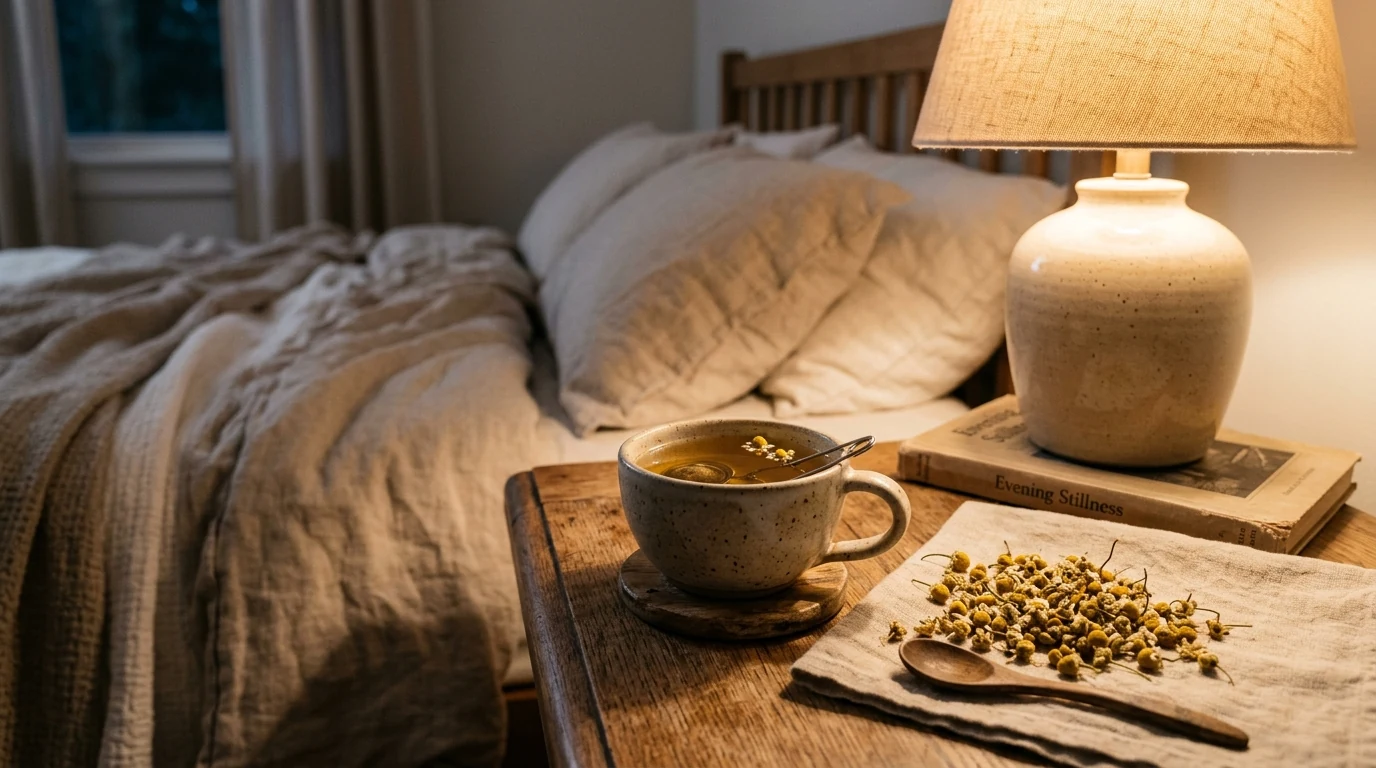
A cup of chamomile tea before bed is a familiar recommendation. It is also one of those pieces of advice that gets repeated so often that the original question can disappear: does chamomile actually make you sleepy, or is it simply a pleasant drink that happens to be part of a bedtime routine?
The evidence does not give a simple yes.
Chamomile has traditionally been used for insomnia, often as a warm herbal tea. But clinical research has not established that an ordinary cup of chamomile reliably makes people fall asleep or treats clinical insomnia. The National Center for Complementary and Integrative Health (NCCIH) notes that there is very little information on chamomile's effect on insomnia, and a 2019 review identified only one randomized trial that had directly tested chamomile for insomnia; that study found no significant improvement in insomnia severity. [1][2]
There is a more encouraging line of research around sleep quality. A 2019 systematic review and meta-analysis found a significant improvement in sleep quality in pooled chamomile trials, although the evidence base was small and the researchers called for larger studies. A newer 2024 systematic review also found evidence of possible sleep benefits, but the individual studies differed in design, preparation, and participants. [3][4]
So if the question is "Will chamomile knock me out?" the evidence does not support that promise. If the question is "Can chamomile be part of a bedtime routine, and might it help some aspects of sleep?" that is a far more reasonable one. To understand how this fits into daily nutrition, you can also explore our guide on whether chamomile tea is healthy and our overview of what chamomile tea is good for.
Why Do People Associate Chamomile with Sleep?
Part of the answer is history. Chamomile has been used as a traditional herbal preparation for a very long time, including for sleep and relaxation. It is commonly taken as a warm drink in the evening, which makes it an easy fit for a ritual that already signals the end of the day. [1]
There is also a plausible biological story. Chamomile contains several plant compounds, including the flavonoid apigenin, that have been studied in laboratory and other preclinical work. Researchers have investigated whether these compounds may interact with GABA receptors in pathways involved in relaxation and sleep. [5] Learn more about the botanical background in our explainer on what chamomile tea is.
But a plausible mechanism is not the same thing as a demonstrated effect in people.
That distinction matters with herbal teas. A compound can show an interesting effect in cells or animals, yet the amount delivered by an ordinary cup of tea may be much lower or otherwise behave differently in the body. The research question is therefore not just whether chamomile contains a potentially active compound. It is whether a particular preparation, at a particular dose, changes sleep in people.
Does Chamomile Make You Drowsy?
Some people say they feel sleepy after drinking chamomile. That is a real personal experience, but it cannot by itself establish that chamomile causes drowsiness for everyone.
In clinical research, the picture is mixed. The 2011 pilot trial of a standardized chamomile extract enrolled 34 adults with chronic primary insomnia. Participants received 270 mg of extract twice a day or placebo for 28 days. The researchers found no significant difference between groups in sleep-diary measures such as total sleep time, sleep efficiency, sleep latency (time to fall asleep), time awake after sleep onset, sleep quality, or number of awakenings. [6]
That is a useful result to know because it cuts against the strongest version of the bedtime claim. Even a concentrated extract, tested in people with chronic insomnia, did not clearly improve the main sleep measures in that small pilot study.
At the same time, it does not prove that nobody ever feels sleepy after drinking chamomile. Individual experiences can be different, and a relaxing evening ritual can change how ready someone feels for bed.
Sleepiness and Sleep Quality Are Not the Same Thing
This is where much of the confusion starts.
Feeling sleepy is an immediate sensation. Sleep quality is broader. It can include how easily someone falls asleep, how often they wake during the night, how restorative the sleep feels, and related measures used by researchers.
A 2019 systematic review and meta-analysis looked at 12 randomized or quasi-randomized trials involving chamomile and outcomes including state anxiety, generalized anxiety disorder, insomnia, and sleep quality. The researchers found a significant improvement in pooled sleep-quality measures, but only one included trial evaluated insomnia directly, and that trial did not show a significant change in insomnia severity. [3]
That means it is possible to have a research signal around sleep quality without having strong evidence that chamomile treats insomnia. The distinction is worth keeping when reading headlines: "May improve some sleep measures" is not the same statement as "makes you sleepy."
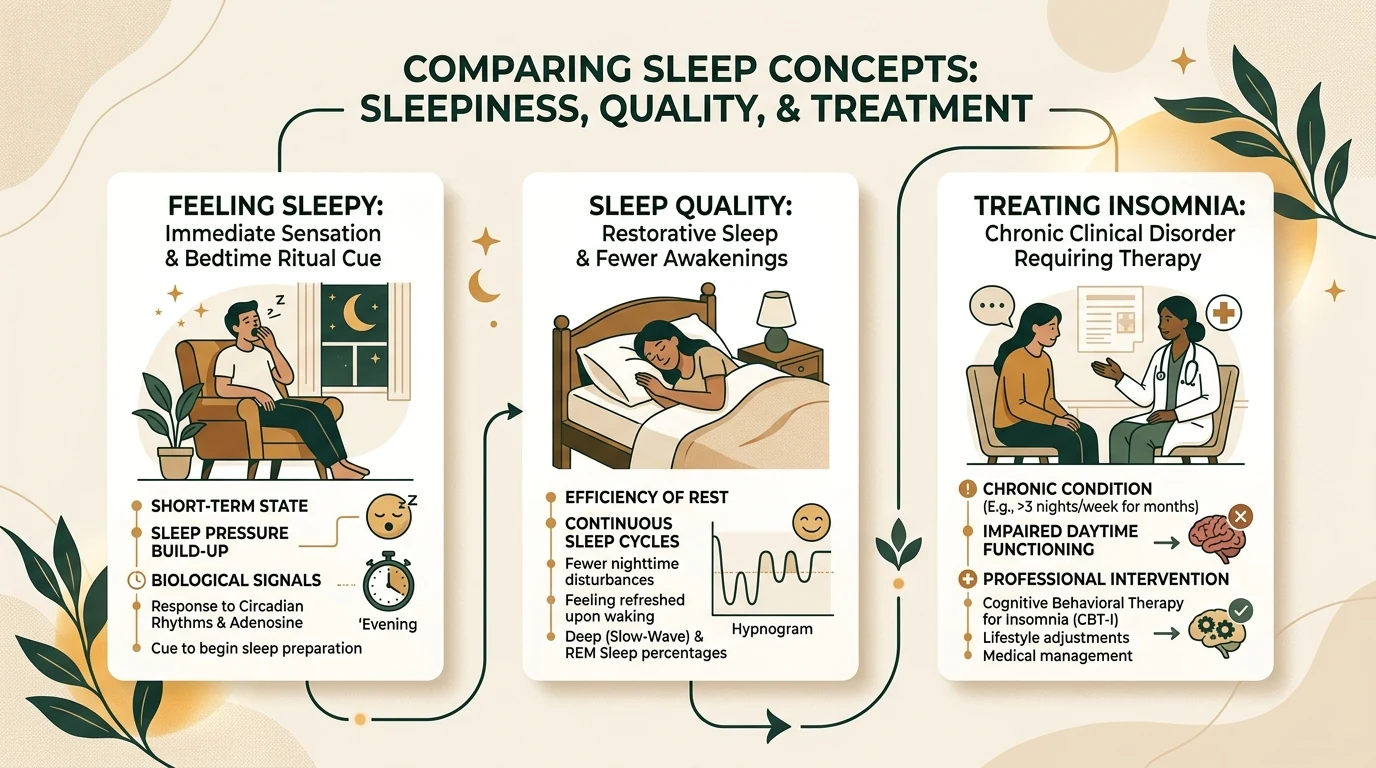
Figure 1: Distinguishing immediate sleepiness, broader sleep quality, and clinical insomnia treatment.
What Did the Newer Research Find?
A 2024 systematic review and meta-analysis examined clinical trials of Matricaria chamomilla and sleep. The researchers searched several major databases through August 2023 and included clinical trials in healthy or diseased adults. [4]
The review adds to the idea that chamomile may have some effect on sleep outcomes, but it does not settle the question. The included studies were not identical. They differed in participants, preparations, doses, duration, and sleep measurements. That makes a broad claim about "chamomile tea" difficult because the word chamomile can refer to very different interventions.
This is a recurring issue in herbal research. A standardized extract, a supplement, a multi-herb formulation, and a home-brewed cup of flowers should not be treated as interchangeable simply because the same plant appears on the label.
For readers, that means the safest conclusion is a measured one: research gives chamomile a plausible place in discussions of sleep, but it does not establish a predictable sedative effect from a normal cup of tea.
What About Anxiety and Winding Down?
Sleep does not happen in isolation. Stress and anxiety can make it harder to settle at night, which is one reason chamomile's research on anxiety gets mentioned alongside sleep.
NCCIH says some preliminary studies suggest a chamomile dietary supplement might help generalized anxiety disorder, but the evidence is not conclusive. [7] The 2019 review also found a significant improvement in generalized anxiety disorder symptoms after some periods of chamomile treatment, while finding little evidence that chamomile reduced state anxiety overall. [3]
Again, much of this research concerns supplements or extracts rather than ordinary tea. That leaves a narrower but still useful point for tea drinkers. A cup of chamomile can be part of a low-stimulation evening routine. The routine may include sitting down, turning off bright screens, reading, or simply giving the day a clear stopping point. None of that proves the tea itself is a sedative. It does explain why the beverage can become associated with bedtime.
How Long Before Bed Should You Drink Chamomile Tea?
There is no well-established evidence-based schedule showing that chamomile must be taken a precise number of minutes before sleep to produce a reliable effect.
You will see advice recommending 30, 45, or 60 minutes before bed. Those numbers are often presented as though they come from a universal rule. They do not.
A more sensible approach is practical: drink it at a time that fits your evening routine and does not force you to wake during the night to use the bathroom. If a hot beverage close to bedtime tends to interrupt sleep, move it earlier. The important point is not to confuse a convenient routine with a medically proven timing protocol.
How Much Chamomile Tea Should You Drink for Sleep?
There is no universally established amount of ordinary chamomile tea that has been proven to treat insomnia.
Research doses are often reported for extracts rather than cups of tea, and even tea studies vary in how much flower material is used and how it is prepared. That makes a statement such as "one cup is enough" or "two cups work better" much more certain than the evidence allows.
For an ordinary beverage, follow the preparation directions on the product. If the goal is to manage persistent insomnia, increasing the amount of tea is not a substitute for addressing the underlying sleep problem. More is not automatically better, particularly when moving from a food or beverage into concentrated supplements.
Could the Warmth or Ritual Be Part of the Experience?
Possibly, and this is a reasonable place to be open about uncertainty.
A bedtime routine works partly through association. Doing the same few quiet things before bed can give the brain a repeated cue that the day is ending. Chamomile may simply be one part of that pattern.
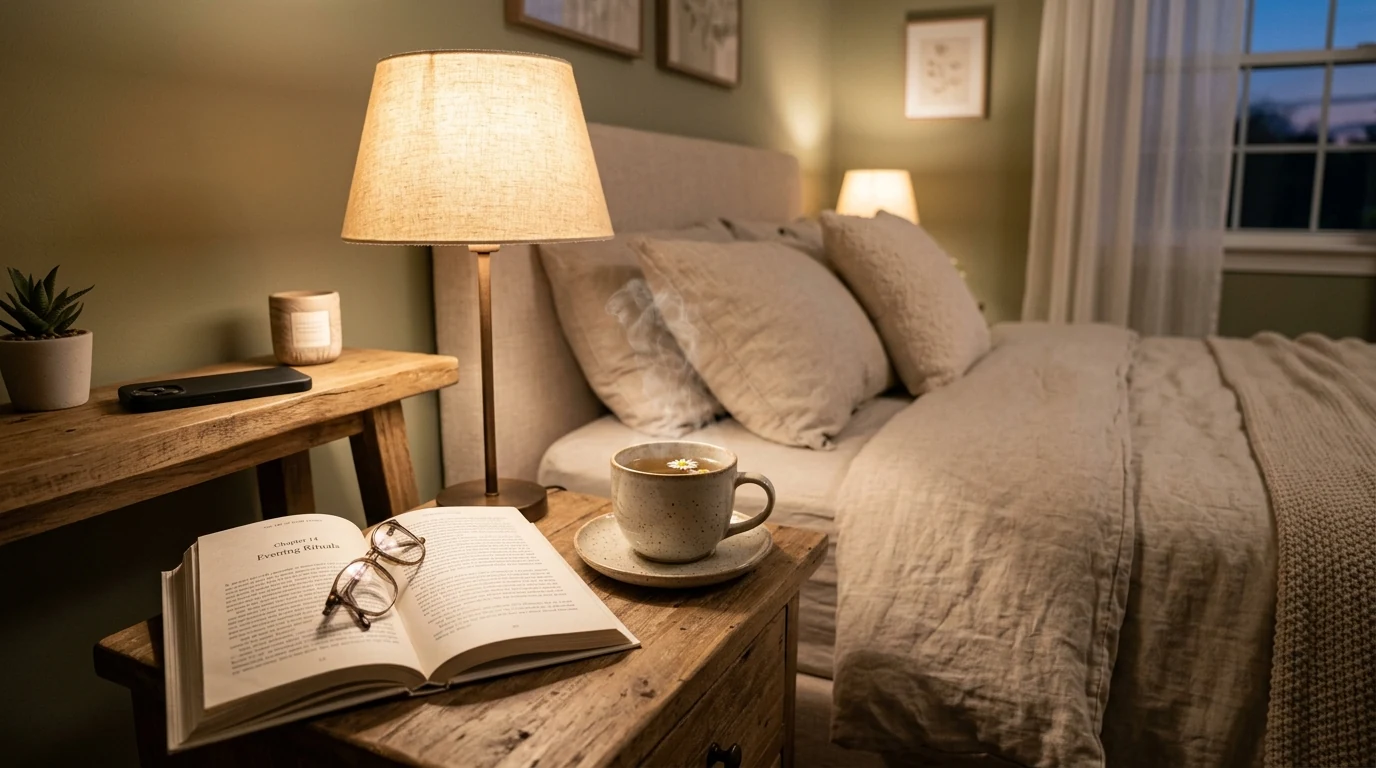
Figure 2: A quiet evening routine with low stimulation, a book, and warm chamomile tea.
There is no need to choose between "the tea works" and "the ritual works." Both could contribute to how an individual experience feels, although clinical studies are needed to separate those effects.
A useful bedtime routine might therefore look ordinary: lower the lights, put the phone away, have a caffeine-free drink, and go to bed at a reasonably consistent time. Chamomile can fit into that routine without needing to be sold as a pharmaceutical substitute.
What If You Are Still Waking Up at Night?
This is the point where the answer should stop being about tea.
If sleep problems persist for weeks, happen most nights, or cause daytime fatigue, poor concentration, or other impairment, the issue may be chronic insomnia or another sleep disorder. Tea may be pleasant, but it should not become the main treatment simply because it feels natural.
Persistent snoring, gasping or choking during sleep, restless legs, unusual nighttime movements, severe daytime sleepiness, or significant mood changes can also point to problems that deserve professional assessment. The better question is then not "Which tea should I try?" but "Why is my sleep not working?"
Is Chamomile Safe at Night?
For most adults, chamomile is likely safe when consumed in amounts commonly found in teas and foods. NCCIH notes that allergic reactions can occur, particularly in people who are allergic to related plants such as ragweed, chrysanthemums, marigolds, or daisies. [1]
Chamomile may also interact with some medicines. Reported or theoretical interactions include warfarin and some medicines metabolized by the liver, as well as possible interaction with sedatives. [8] People who are pregnant or breastfeeding should be more cautious because there is limited safety information. [1] For a thorough overview of health aspects, see our core pillar guide on chamomile tea benefits, uses, safety, and how to drink it.
And there is a practical issue with the word "chamomile": a blend can contain other herbs or even caffeinated tea. If avoiding caffeine is part of the reason for choosing chamomile at night, check the ingredient list. Choosing pure 100% whole dried chamomile flowers guarantees zero added caffeine or fillers.
So, Does Chamomile Tea Actually Make You Sleepy?
Not reliably enough to call it a proven sedative.
Chamomile has a long traditional connection with bedtime, and clinical research has produced some interesting findings around sleep quality and anxiety. But the direct evidence for insomnia is weak, and studies of concentrated chamomile preparations do not automatically tell us what an ordinary cup of tea will do. [1][3][4][6]
That leaves chamomile in a useful middle ground: it can be a pleasant, caffeine-free drink and a sensible part of a wind-down routine. Some people may find it relaxing. Research suggests that certain chamomile preparations may improve aspects of sleep, but the evidence does not justify promising that a cup will make anyone fall asleep. If the tea helps a person close the day quietly, that is already a useful role. It just should not be confused with treating a sleep disorder.
Frequently Asked Questions
How quickly does chamomile tea make you sleepy?
There is no well-established time point at which a normal cup of chamomile reliably produces sleepiness. Research has not established a universal onset time for a sedative effect from chamomile tea.
Is chamomile a sedative?
Chamomile is often described as calming or sedating in traditional use and preclinical research, but clinical evidence does not establish ordinary chamomile tea as a predictable sedative.
Can I drink chamomile tea every night?
For most adults, chamomile is likely safe in the amounts commonly found in tea and food. Regular use should be discussed with a healthcare professional if you have allergies, take medicines, are pregnant or breastfeeding, or have a medical condition. [1][8]
Is chamomile tea better than sleeping pills?
They are not directly comparable. Medicines used to treat insomnia have specific indications, doses, risks, and evidence. Chamomile tea is a beverage with limited clinical evidence for insomnia.
Does chamomile tea contain melatonin?
Pure chamomile tea is not the same thing as a melatonin supplement. Chamomile should not be marketed as though it supplies a therapeutic melatonin dose.
Can chamomile tea help with insomnia?
There is not enough evidence to say that ordinary chamomile tea treats insomnia. NCCIH notes that there is very little information on chamomile's effect on insomnia, and the limited direct trial evidence has not shown a clear benefit. [1][2]
When is the best time to drink chamomile tea?
There is no medically established "best" time. Many people choose the evening because chamomile is caffeine-free and fits naturally into a wind-down routine. Choose a time that works with your sleep schedule and avoids nighttime bathroom trips.
What should I do if chamomile does not improve my sleep?
Do not keep increasing the amount in the hope that more tea will fix persistent insomnia. Review your sleep habits and consider speaking with a healthcare professional if sleep problems continue or affect daytime functioning.
Evidence & Scientific Sources
- NCCIH — Chamomile: Usefulness and Safety — nccih.nih.gov/health/chamomile
- NCCIH — Sleep Disorders and Complementary Health Approaches: Usefulness and Safety — nccih.nih.gov/health/sleep-disorders
- Hieu TH, Dibas M, Surya Dila KA, et al. Therapeutic efficacy and safety of chamomile for state anxiety, generalized anxiety disorder, insomnia, and sleep quality: a systematic review and meta-analysis. Phytotherapy Research. 2019;33(6):1604–1615. — PubMed: 31006899
- Kazemi A, Shojaei-Zarghani S, Eskandarzadeh P, Hashempur MH. Effects of chamomile (Matricaria chamomilla L.) on sleep: A systematic review and meta-analysis of clinical trials. Complementary Therapies in Medicine. 2024;84:103071. — PubMed: 39106912
- McKay DL, Blumberg JB. A review of the bioactivity and potential health benefits of chamomile tea (Matricaria recutita L.). Phytotherapy Research. 2006;20(7):519–530. — PubMed: 16628544
- Zick SM, Wright BD, Sen A, Arnedt JT. Preliminary examination of the efficacy and safety of a standardized chamomile extract for chronic primary insomnia: a randomized placebo-controlled pilot study. BMC Complementary and Alternative Medicine. 2011;11:78. — PubMed: 21939549
- NCCIH — Anxiety and Complementary Health Approaches: What the Science Says — NCCIH Clinical Digest
- NCCIH — Herb-Drug Interactions: What the Science Says — NCCIH Herb-Drug Guide