You will often see chamomile assigned a precise bedtime slot: 30 minutes, 45 minutes, perhaps an hour before sleep. That sounds reassuringly exact. The evidence is not that exact. Research has studied chamomile and sleep, but it has not established a universal clock time for an ordinary cup of tea.
Understanding how to build an evening ritual without falling for rigid, unverified timing rules allows you to enjoy the drink naturally. If you are exploring the scientific background on sleep outcomes, be sure to read our review on chamomile tea for sleep and our fundamental overview of what chamomile tea is.
Why the Evening Makes Sense
Pure chamomile is naturally caffeine-free, which makes it different from black or green tea. Older health articles regularly suggested it as part of an evening routine, sometimes alongside a bath, lower lights, less screen time, or other ways of winding down. [1][2][3]
That is practical advice, not a clinical timing formula.
Where the 30–45 Minute Advice Came From
A 2016 clinical-practice article suggested drinking chamomile 30–45 minutes before bed. A 2017 consumer health article also placed chamomile in the period before sleep. These recommendations reflected common practice rather than a trial showing that 45 minutes is biologically superior to 30. [4][5]
The distinction matters because readers can easily mistake a convenient routine for a proven dose-and-timing protocol.
What the Tea Trial Tells Us
The 2016 trial in postnatal women asked participants to drink chamomile tea over a two-week period. It did not demonstrate that a particular number of minutes before bedtime was responsible for the outcome. [6]
The study therefore supports research into the drink as a whole, not a stopwatch.
And the Extract Studies?
The 2011 insomnia study used 270 mg of standardized extract twice daily, while the 2017 older-adult study used 200 mg twice daily. [7][8] Those schedules tell us how the investigators administered their research preparations. They do not establish the best time to drink a homemade cup.
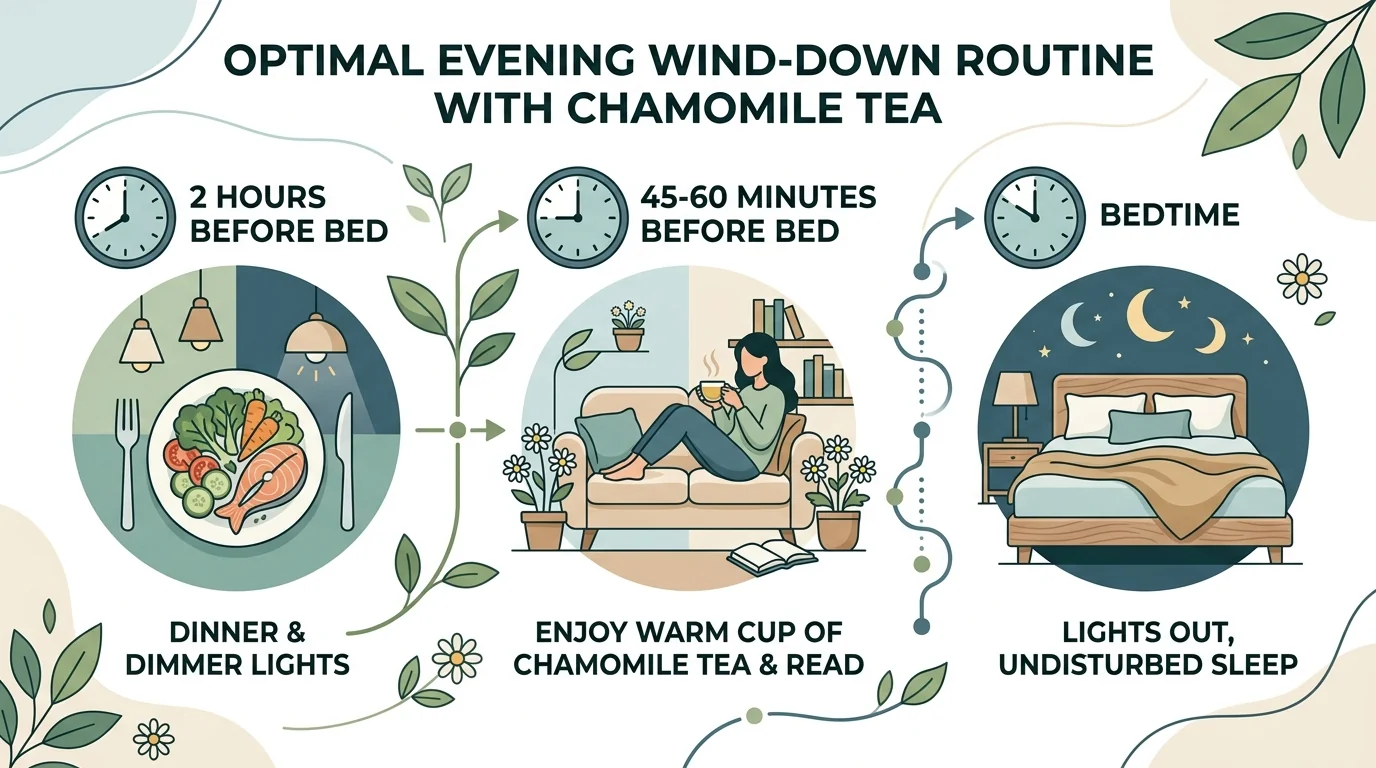
Figure 1: Structuring a restful evening routine—dinner, gentle dimming of lights, warm cup of chamomile tea 45-60 minutes before bed, and quiet rest.
A Sensible Bedtime Approach
For an ordinary tea routine, choose a time that works with the evening. An hour before bed may suit one person; another may prefer earlier because a large mug late at night can lead to a bathroom trip.
The useful question is not “What exact minute unlocks the effect?” It is “When can this drink fit into the wind-down without disturbing sleep?” You should also evaluate how much chamomile tea should you drink for sleep to find the ideal quantity for your schedule.
Do Not Turn a Bedtime Cup into a Sleep Test
Sleep varies from night to night. Stress, late meals, alcohol, exercise, temperature, illness, and schedule changes can all matter. A person who sleeps well after tea once has not established a causal relationship, and a person who has a bad night after tea has not disproved it either.
A repeated routine over time is more sensible than judging the drink by a single night. To understand why people notice relaxation, read our breakdown of whether chamomile tea makes you sleepy or simply relaxed.

Whole-Flower Chamomile Tea
Brew a soothing cup 45 minutes before sleep. Our pure, unsprayed whole chamomile flowers release a naturally sweet, apple-like aroma and calming herbal infusion without a trace of caffeine.
When Timing Is the Wrong Question
If sleep trouble is persistent, changing the tea time again and again is unlikely to solve the underlying problem. Chronic insomnia, sleep apnea, restless legs, pain, anxiety, or medication effects may require a different response.
Safety
Chamomile is generally considered likely safe in typical food and tea amounts, but allergies and medicine interactions are possible. Anyone taking regular medication, pregnant or breastfeeding, or managing a health condition should check before making concentrated or frequent use routine. [9] For complete guidelines, review our core reference on chamomile tea benefits, uses, and safety.
Historical Source Set Used for This Article
- WebMD, 2012 — “Sleep Supplements: Melatonin, Valerian, and More.” WebMD ↗
- Mayo Clinic Health Letter, 2013 — “I've read that chamomile tea is a sleep aid— is that true?” Mayo Clinic ↗
- ABC Health, 2017 — “What natural remedies can I use to achieve peaceful sleep?” ABC Health ↗
- Clinical Exercise, 2016 — “Calm down and sleep better with chamomile.” Clinical Exercise ↗
- Foods for Better Health, 2017 — “Chamomile Tea for Sleep: Why Should You Take It before Bed?” Foods for Better Health ↗
- Chang S-M & Chen C-H, 2016 — Journal of Advanced Nursing: chamomile tea in postnatal women. PubMed: 26483209 ↗
- Zick SM et al., 2011 — BMC Complementary and Alternative Medicine: standardized chamomile extract insomnia trial. PubMed: 21939549 ↗
- Adib-Hajbaghery M & Mousavi SN, 2017 — Complementary Therapies in Medicine: older-adult sleep trial. PubMed: 29154054 ↗
- NCCIH (NIH), 2020 — “Chamomile: Usefulness and Safety.” NIH NCCIH ↗