Chamomile tea is a caffeine-free herbal infusion made by steeping dried chamomile flowers in hot water. Despite the name, it is not a true tea like black, green, white, or oolong tea because those beverages come from the Camellia sinensis plant. Chamomile comes from a different flowering plant, so technically it is a tisane, or herbal infusion.[1][2]
For most readers, the useful distinction is simple: chamomile tea is a floral, naturally caffeine-free drink made from chamomile flowers. The plant has a long history of traditional use, but modern research does not support treating chamomile tea as a proven remedy for specific health conditions. Evidence varies by use, product, and preparation.[1]
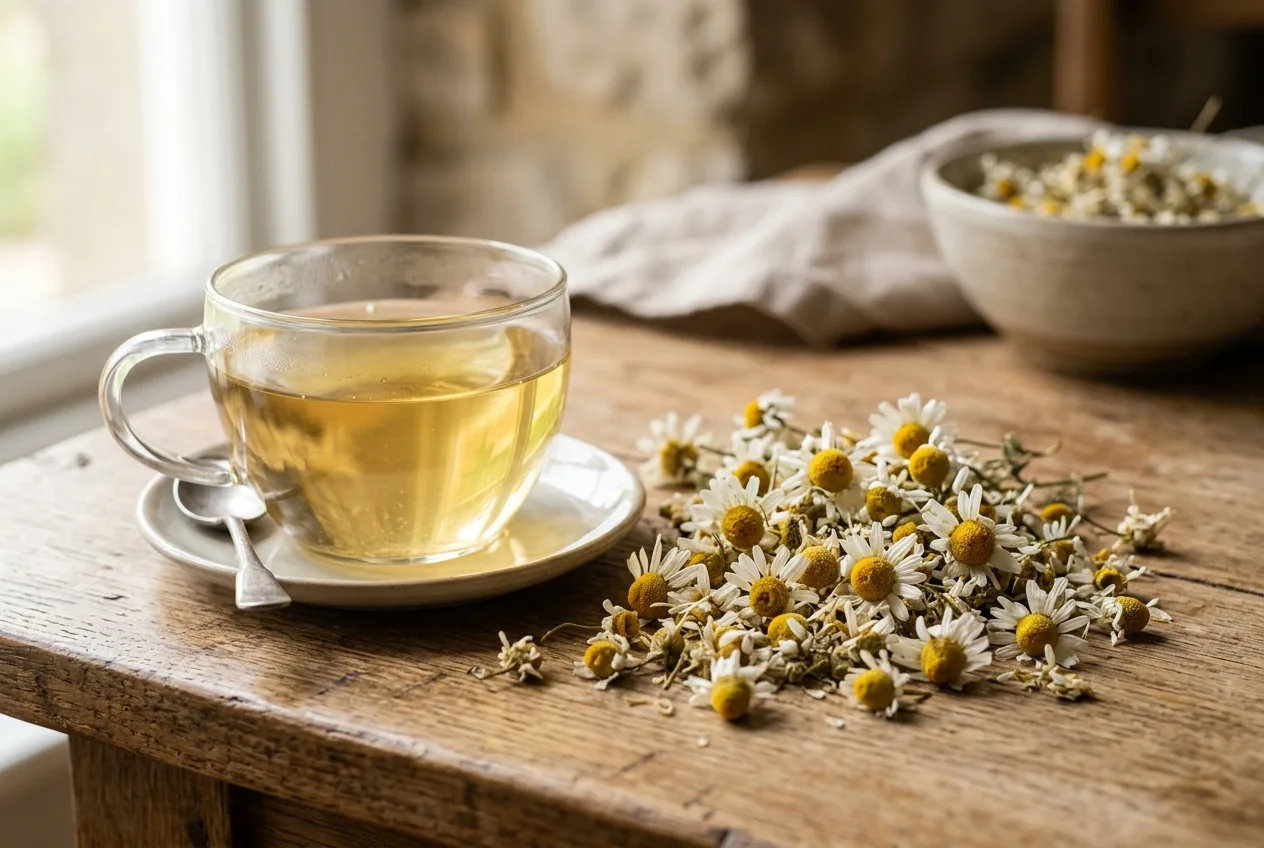
 Pure dried chamomile flowers steeped into a pale golden herbal infusion.
What exactly is chamomile?
Chamomile is a flowering herb in the Asteraceae, or daisy, family. “Chamomile” can refer to more than one plant, but two types are especially familiar in herbal products: German chamomile and Roman chamomile.[1]
German chamomile is known botanically as Matricaria recutita, Matricaria chamomilla, or Chamomilla recutita. NCCIH focuses its chamomile safety and evidence information on German chamomile.[1] Roman chamomile is commonly identified as Chamaemelum nobile. The two plants are related, but they are not the same species.
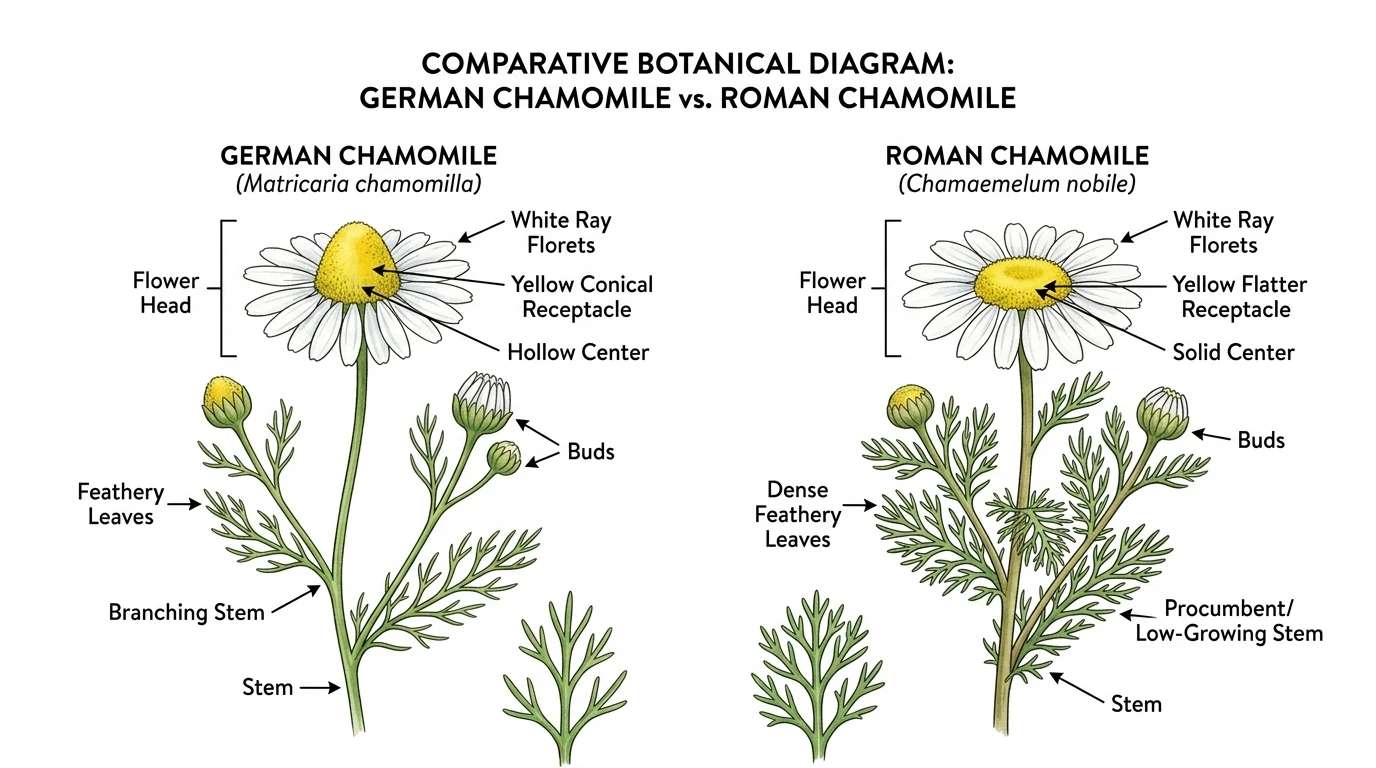 Botanical comparison between German Chamomile (Matricaria chamomilla) and Roman Chamomile (Chamaemelum nobile).
When people talk about chamomile tea, they generally mean dried flower heads steeped in hot water. The flowers contain a range of naturally occurring plant compounds, including flavonoids and volatile constituents, which contribute to the plant’s aroma, colour, and taste.[3]
The important point is that the cup is made from a flower, not from the tea plant used to make conventional black or green tea.
Why is chamomile called a tea if it is not true tea?
“Tea” is commonly used as a broad everyday term for hot infusions. In botanical terms, however, true tea comes from Camellia sinensis. Black tea, green tea, oolong tea, white tea, and similar varieties are all made from that plant.[2]
Chamomile belongs to a different category. It is an herbal infusion, often called a tisane.
That distinction matters when comparing caffeine. Because pure chamomile flowers do not come from Camellia sinensis, chamomile tea is naturally caffeine-free.[2] This makes it different from black or green tea, which naturally contain caffeine.
What does chamomile tea look and taste like?
A brewed cup of chamomile is usually pale yellow to golden, depending on the flowers, amount used, brewing time, and water.
The flavour is typically mild and floral. Many people notice a soft, slightly apple-like aroma, although taste varies by plant material and preparation.[2][4]
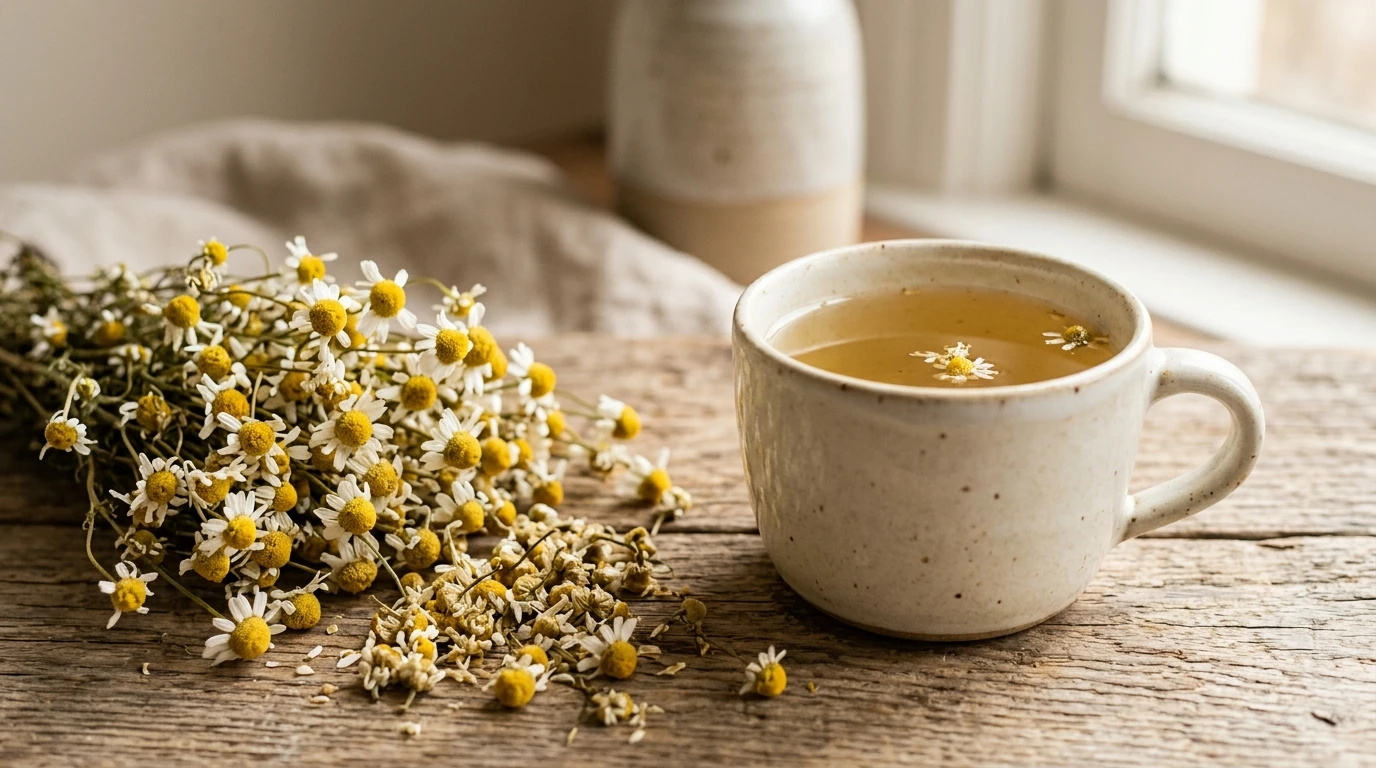
Whole dried flower heads can also look quite different from tea bags. Loose chamomile may contain recognizable flower heads, small pieces of petals, and natural plant material. A tea bag may contain more finely cut material because it needs to fit inside the bag.
Neither format is automatically better simply because it looks different. The practical differences are convenience, how much of the flower you can see, how easy it is to control the amount, and how you prefer to brew.
What is chamomile tea used for?
Chamomile has a long history of traditional use, and today it is promoted for a wide range of purposes, including relaxation, digestive complaints, sleep, and other health concerns.[1]
That does not mean all of those uses are proven.
NCCIH notes that studies of chamomile for specific conditions have not produced sufficient reliable evidence to establish clinical usefulness across the board. Some preliminary research has explored chamomile extracts for generalized anxiety disorder, while evidence for insomnia remains very limited.[1][5]
There is also an important distinction between chamomile tea and concentrated chamomile extracts. Research studies may use standardized extracts, combinations of herbs, or doses that are not equivalent to an ordinary cup of tea. A result from an extract study should therefore not automatically be presented as proof that the same effect comes from drinking a cup of chamomile tea.[1]
📖 For broader evidence on benefits and uses, see our complete guide: Chamomile Tea: Benefits, Uses, Safety & How to Drink It.
Is chamomile tea naturally caffeine-free?
Yes. Pure chamomile tea is naturally caffeine-free because chamomile is an herbal infusion rather than a product made from Camellia sinensis.[2]
That makes it a useful choice for someone who wants a hot beverage without the caffeine found in conventional tea and coffee.
It is worth checking the ingredient list when buying a flavoured or blended product. A chamomile blend can contain other plants, including ingredients that may change the caffeine content. Pure chamomile flower tea is the simplest option when avoiding caffeine is the priority.
What is in a cup of chamomile tea?
The exact chemical composition of a cup depends on the plant, harvest, processing, storage, amount used, water, and brewing conditions. Chamomile flowers contain several groups of naturally occurring compounds, including flavonoids and volatile oils.[3]
Apigenin is one of the chamomile flavonoids that receives attention in research, but it is important not to turn the presence of a plant compound into a guaranteed health outcome. The concentration and availability of compounds in a brewed tea are not necessarily the same as those in a standardized research extract.
This is one reason evidence-based writing about herbal teas should separate what is known about the plant’s chemistry from what clinical trials actually show.
Whole flowers, loose chamomile, or tea bags?
Chamomile is sold in several common forms:
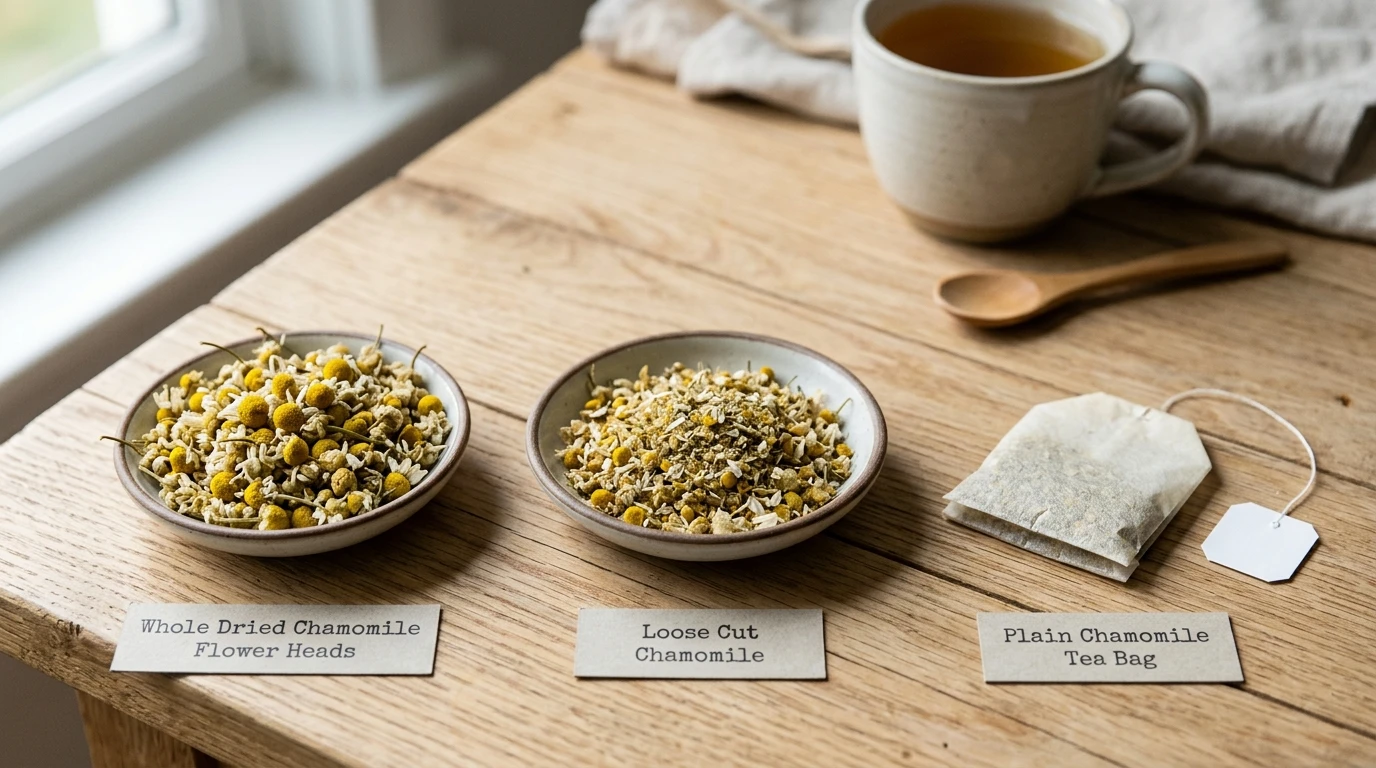 Side-by-side comparison of whole dried chamomile flowers, loose cut chamomile, and plain tea bags.
- Whole or loosely cut flowers: These let you see more of the botanical material and give you control over how much you brew. They work well with an infuser, teapot, or strainer. Read our guide to dried chamomile flowers.
- Tea bags: These are convenient and easy to use. The plant material is usually cut more finely so it can fit in the bag. Read our guide to chamomile tea bags.
- Powdered or finely milled chamomile: This is a different format and may be more useful for certain culinary or product applications than for a simple cup of herbal tea.
- Extracts and supplements: These are more concentrated products and should not be treated as interchangeable with chamomile tea. Their research evidence, dosing, and safety considerations can differ.[1]
For a simple cup at home, whole dried flowers or a standard chamomile tea bag are the two most straightforward formats.
How do you make chamomile tea?
The basic method is simple:
- Place dried chamomile flowers or a chamomile tea bag in a cup or teapot.
- Add hot water (around 90°C–95°C).
- Cover and allow the infusion to steep for 5 to 7 minutes.
- Strain the flowers if using loose material.
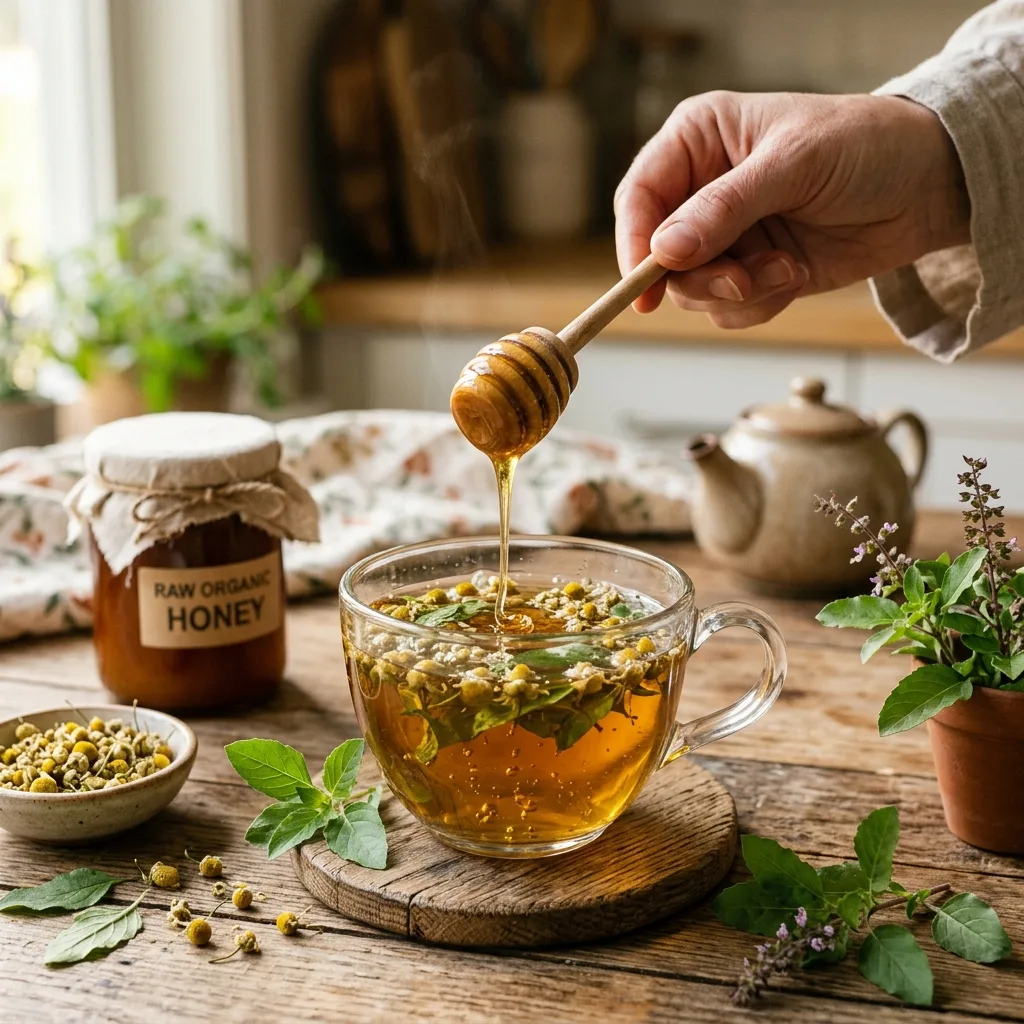
- Serve plain or add a natural sweetener like honey if desired.
There is no single universally “correct” strength. A practical approach is to start with the product’s preparation directions and adjust the amount or steeping time to taste.
When do people drink chamomile tea?
Because chamomile is caffeine-free, many people choose it in the evening or at other times when they want a non-caffeinated beverage.
However, timing should not be confused with a proven treatment effect. NCCIH says there is very little information on chamomile’s effect on insomnia, and a review found no clear benefit for insomnia from the limited available evidence.[1][5]
So “evening tea” is a reasonable description of how the drink is commonly used. “Proven sleep treatment” is not.
Is chamomile tea safe?
NCCIH says chamomile is likely safe when consumed orally in amounts commonly found in teas and foods.[1] That does not mean everyone should assume it is risk-free.
People who are allergic to related plants, including ragweed, chrysanthemums, marigolds, or daisies, may be more likely to react to chamomile.[1][4] Drug interactions have also been reported, including interactions involving warfarin and some medicines metabolized by the liver.[1][6]
A 2025 systematic review of adverse events found that reported adverse events in clinical trials were generally minor and self-limiting, but case reports included allergic reactions, including rare severe reactions. The review also noted insufficient safety data during pregnancy and lactation.[7]
How should you choose chamomile tea?
If you are buying chamomile primarily as a beverage, start with the product itself rather than broad health promises. Check:
- Ingredient list: Look for the actual ingredients and whether the product is pure chamomile or a blend.
- Plant identity: Confirm whether it is German chamomile, Roman chamomile, or another species.
- Format: Choose whole flowers, loose cut flowers, or tea bags based on how you prefer to brew.
- Packaging: Herbal material benefits from sensible storage and protection from moisture and light.
- Claims: Be cautious with products that promise to cure medical conditions.
Looking for 100% Pure Whole Flower Chamomile Tea?
Single-origin whole dried flowers handpicked for rich aroma and floral taste.
View Pure Chamomile Tea Product →Frequently Asked Questions
Is chamomile tea the same as herbal tea?
Chamomile tea is a type of herbal infusion. "Herbal tea" is a broad category that includes infusions made from plants other than Camellia sinensis.
Does chamomile tea have caffeine?
Pure chamomile flower tea is naturally caffeine-free.
What plant is chamomile tea made from?
Chamomile tea is made by infusing the dried flowers of chamomile plants. German chamomile is identified as Matricaria chamomilla or Matricaria recutita. Roman chamomile is Chamaemelum nobile.
Is chamomile tea the same as chamomile extract?
No. Tea is a brewed beverage. Extracts are concentrated preparations and use different doses. Research on extracts does not automatically apply to tea.
Is chamomile tea proven to help with sleep?
No conclusive evidence shows that chamomile tea treats insomnia. NCCIH notes very limited information on chamomile's effect on insomnia.
Scientific References & Evidence Sources
- NCCIH — Chamomile: Usefulness and Safety
- NCCIH — Tea
- Dai Y-L, Li Y, Wang Q, et al. Chamomile: A Review... Molecules (2023)
- NCCIH — Anxiety and Complementary Health Approaches: What the Science Says
- NCCIH — Sleep Disorders and Complementary Health Approaches
- NCCIH — Herb-Drug Interactions: What the Science Says
- Ostovar M, Rezaee Z, Najibi SM, Hashempur MH. Chamomile: A systematic review of adverse events. Complement Ther Med. 2025;91:103192.