
People usually want a simple number: one cup, two cups, maybe three. The research does not provide a universal sleep dose for ordinary chamomile tea. The published studies use different preparations, amounts, and populations, and several of the better-known trials use extracts rather than a cup of brewed flowers.
Understanding the boundary between culinary tea drinking and clinical pharmacological research keeps your routine grounded. To build a complete picture, see our evidence review on chamomile tea for sleep and our practical guide on when to drink chamomile tea before bed.
There Is No Established Tea Dose for Insomnia
NCCIH notes that there is very little information on chamomile and insomnia, and the direct evidence is limited. [1] That means advice such as “two cups is the right dose” should be treated as a personal routine rather than an evidence-based treatment dose.
What Clinical Trials Actually Used
The 2011 chronic-insomnia trial used 270 mg of chamomile extract twice daily for 28 days. [2] The 2017 older-adult trial used 200 mg of extract twice daily for 28 days. [3]
Neither study establishes how many grams of dried flowers should be steeped in a cup.
The Study That Used Tea
The 2016 postnatal study instructed the experimental group to drink chamomile tea for two weeks. [4] The researchers observed some short-term improvements, but the study still does not supply a universal amount for everyone. The population, preparation, and outcome were specific to that trial.
Why Milligrams Do Not Translate into Cups
An extract is a concentrated preparation. Tea is an infusion. The amount of plant material, water volume, temperature, steeping time, and processing all affect what ends up in the cup.
So a statement such as “270 mg of extract equals one cup of tea” would be an invented conversion. There is no reliable basis for it.
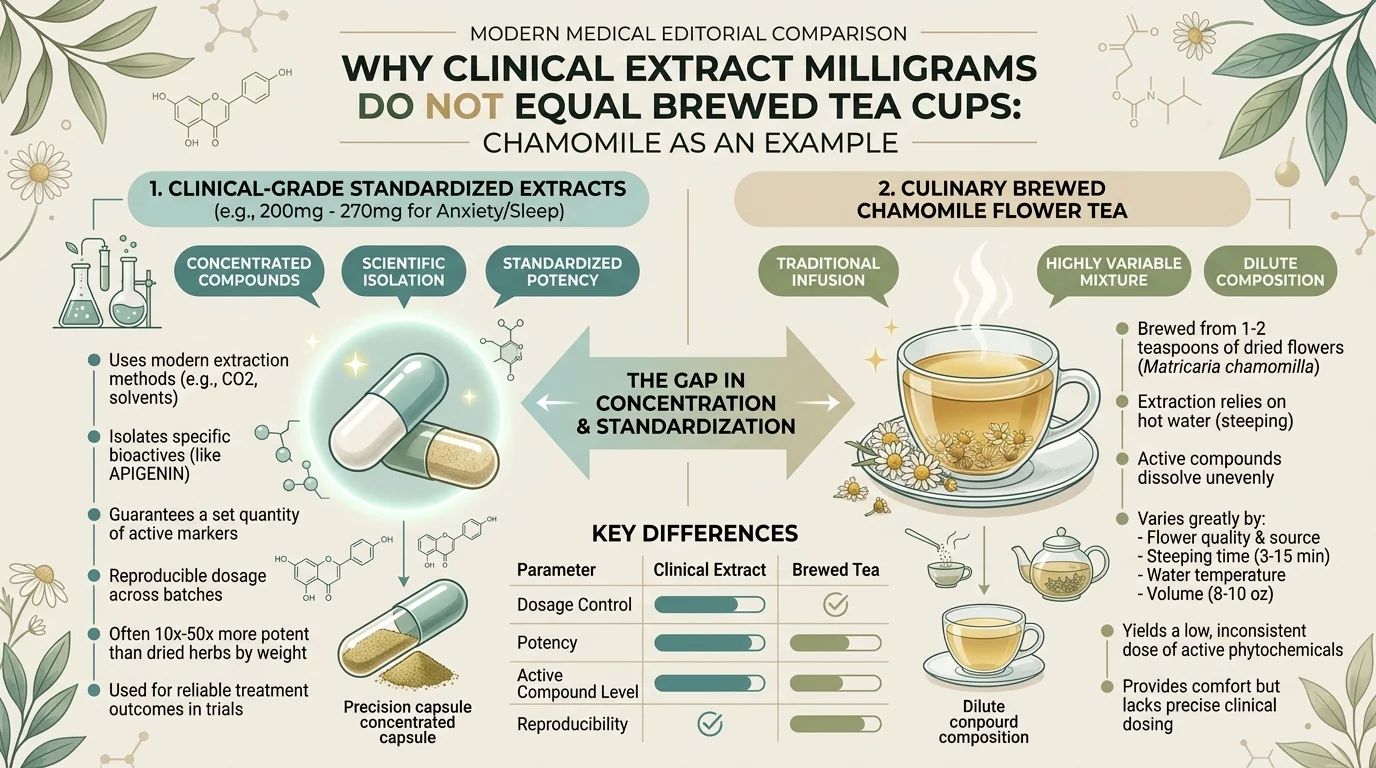
Figure 1: The gap in concentration and standardization—clinical extract capsules versus everyday culinary tea infusion.
How to Approach an Ordinary Cup
Use the preparation directions provided with the product. If none are available, keep the drink at a normal culinary strength rather than repeatedly adding more flowers in search of a stronger sleep effect.
The aim is a beverage. Persistent insomnia is a separate problem and should not be treated by escalating the amount of tea. For step-by-step steeping methods, visit our master guide on how to drink chamomile tea and explore what chamomile tea is.
Could More Tea Be Counterproductive?
More fluid late at night can mean more nighttime bathroom trips. A larger amount of chamomile also means greater exposure to the plant, while a blend may contain other herbs or ingredients.
Anyone with a chamomile allergy, taking interacting medicines, or pregnant or breastfeeding should be especially cautious with regular or concentrated use. [5]
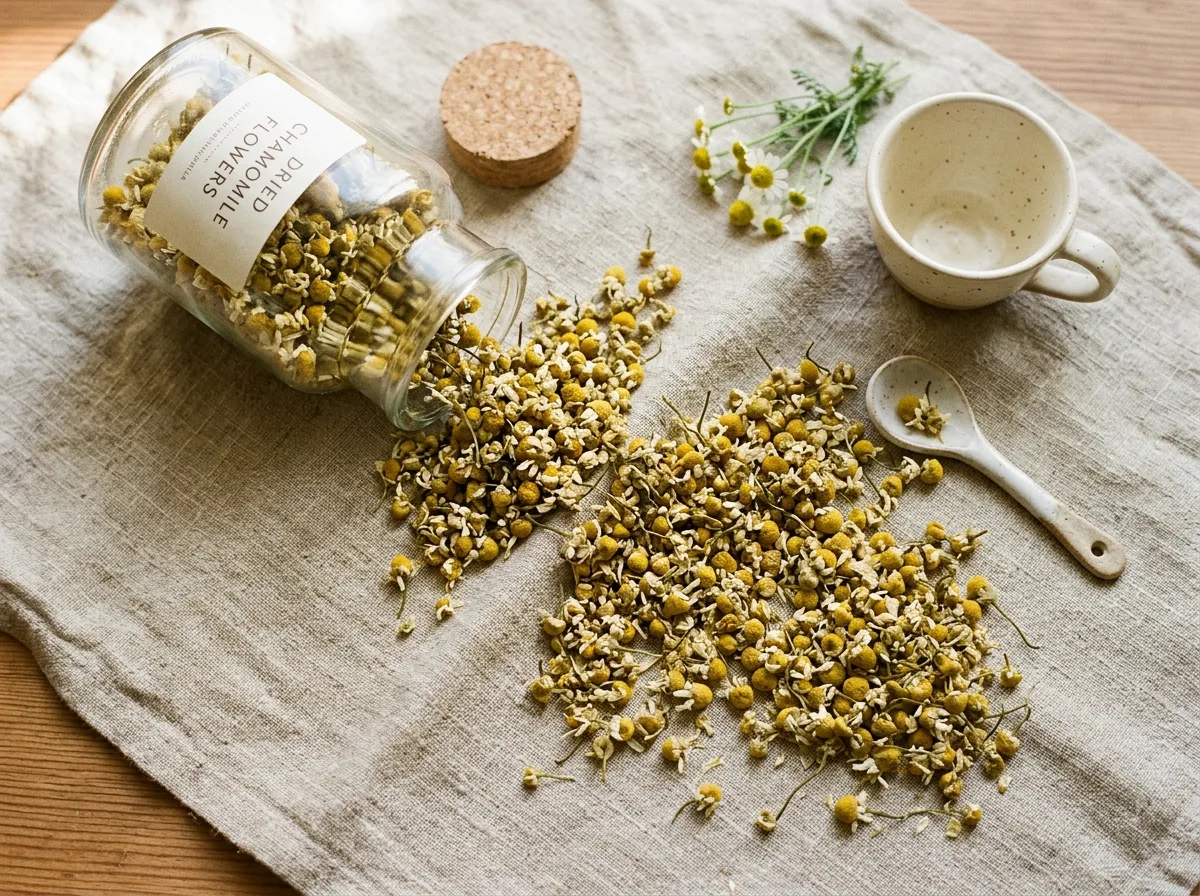
Whole-Flower Chamomile Tea
Just 1 to 2 teaspoons of whole dried chamomile flowers steeped in hot water for 5–7 minutes delivers a full, balanced infusion without needing excessive amounts or artificial additives.
If One Cup Seems to Help
There is nothing wrong with a personal routine. It becomes misleading only when a personal response is turned into a universal medical promise.
“I like a cup before bed” is a preference. “Two cups have been clinically proven to treat insomnia” is not supported by the evidence.
When to Stop Adjusting the Amount
If poor sleep is persistent, affects daytime functioning, or comes with symptoms suggesting another sleep disorder, talk to a healthcare professional. Finding the perfect tea quantity is unlikely to solve a problem whose cause has not been identified.
Historical Source Set Used for This Article
- Zick SM et al., 2011 — standardized chamomile extract, 270 mg twice daily insomnia trial. PubMed: 21939549 ↗
- Mayo Clinic Health Letter, 2013 — chamomile tea and sleep-aid question. Mayo Clinic ↗
- O'Mathúna D, 2011 — The Irish Times: chamomile and sleep. Irish Times ↗
- WebMD, 2012 — natural sleep supplements. WebMD ↗
- Foods for Better Health, 2017 — chamomile tea before bed. Foods for Better Health ↗
- Chang S-M & Chen C-H, 2016 — chamomile tea trial in postnatal women. PubMed: 26483209 ↗
- Adib-Hajbaghery M & Mousavi SN, 2017 — chamomile extract in older adults. PubMed: 29154054 ↗
- Leach MJ & Page AT, 2014/2015 — herbal-insomnia systematic review/meta-analysis. PubMed: 25644982 ↗
- ABC Health, 2017 — natural sleep remedies and chamomile. ABC Health ↗
- NCCIH (NIH), 2020 — “Chamomile: Usefulness and Safety.” NIH NCCIH ↗