Chamomile has a stronger research story for anxiety than its sleep reputation sometimes suggests—but the details matter. Several clinical trials before 2018 investigated chamomile extract in people with generalized anxiety disorder. Those studies are worth taking seriously. They are also studies of a defined extract, not proof that ordinary chamomile tea treats an anxiety disorder.
To see how clinical research on anxiety interfaces with daily habits of calming down, explore our companion analysis on chamomile tea for stress and relaxation and our foundational guide explaining what chamomile tea is.
The First Controlled Trial
A 2009 randomized, double-blind, placebo-controlled trial enrolled 57 people with mild to moderate generalized anxiety disorder. Twenty-eight received chamomile extract and 29 received placebo for eight weeks. The chamomile group had a significantly greater reduction in Hamilton Anxiety Rating Scale scores. [1]
That is meaningful human evidence. It is not the same as a tea trial, and the sample was modest.
What the 2016 Study Added
A later long-term randomized trial began with 179 participants with moderate to severe GAD. During the first phase, participants received pharmaceutical-grade chamomile extract. Responders then entered a double-blind continuation phase comparing chamomile with placebo. The study found lower GAD symptoms during follow-up among those continuing chamomile, although its primary relapse outcome was not statistically significant. [2]
The authors noted limitations including the size of the randomized sample and the unexpectedly low rate of relapse.
There Was an Open-Label Study Too
The same research group published a 2016 open-label study in adults with moderate to severe GAD. Participants received 1,500 mg of chamomile extract per day under a fixed-flexible dosing plan. [3] Because that phase had no placebo group, improvement cannot be attributed to chamomile alone with the same confidence as in a randomized controlled trial.
Expectations Were Studied
A 2017 paper from the same research program examined treatment expectations and found that baseline expectations about treatment effectiveness and side effects were associated with later outcomes. [4]
This does not make the chamomile results meaningless. It shows why anxiety research needs to account for more than the plant itself. Expectations can shape symptom reporting and perceived benefit.
And What About Cortisol?
A 2017 exploratory study examined salivary cortisol during chamomile extract therapy in people with moderate to severe GAD. [5] Such a study can help researchers explore biological pathways. It does not justify a consumer headline saying that chamomile tea “lowers cortisol.” A marker measured during a trial is not a universal measure of stress, and an extract is not a cup of tea.
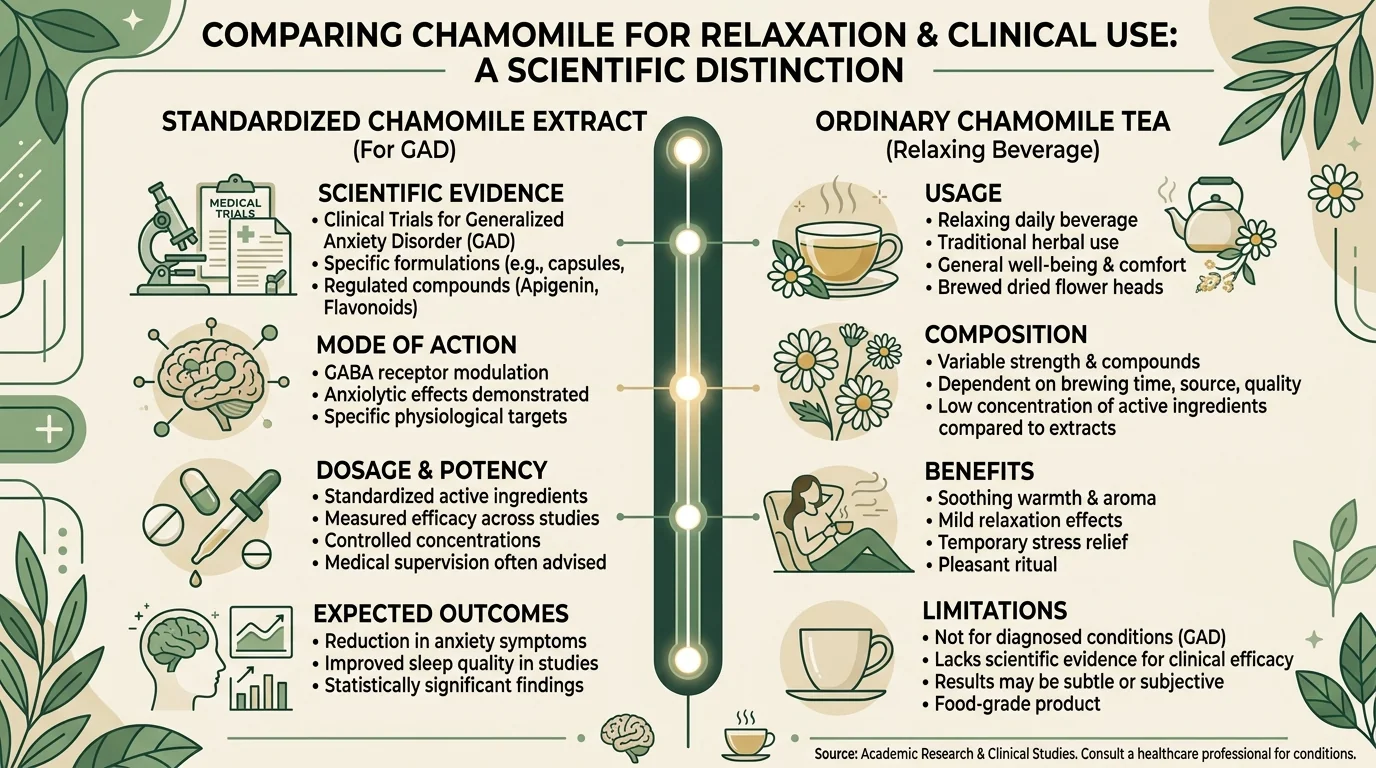
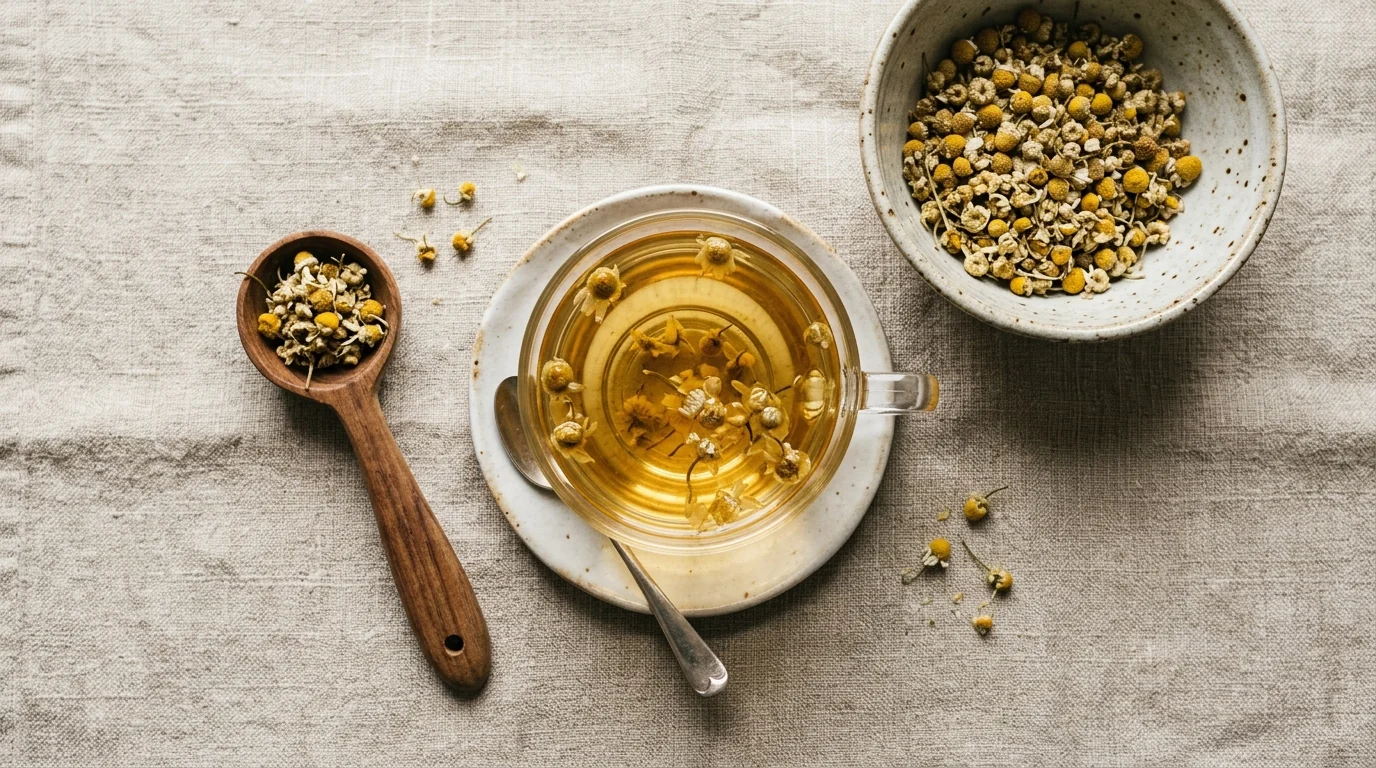
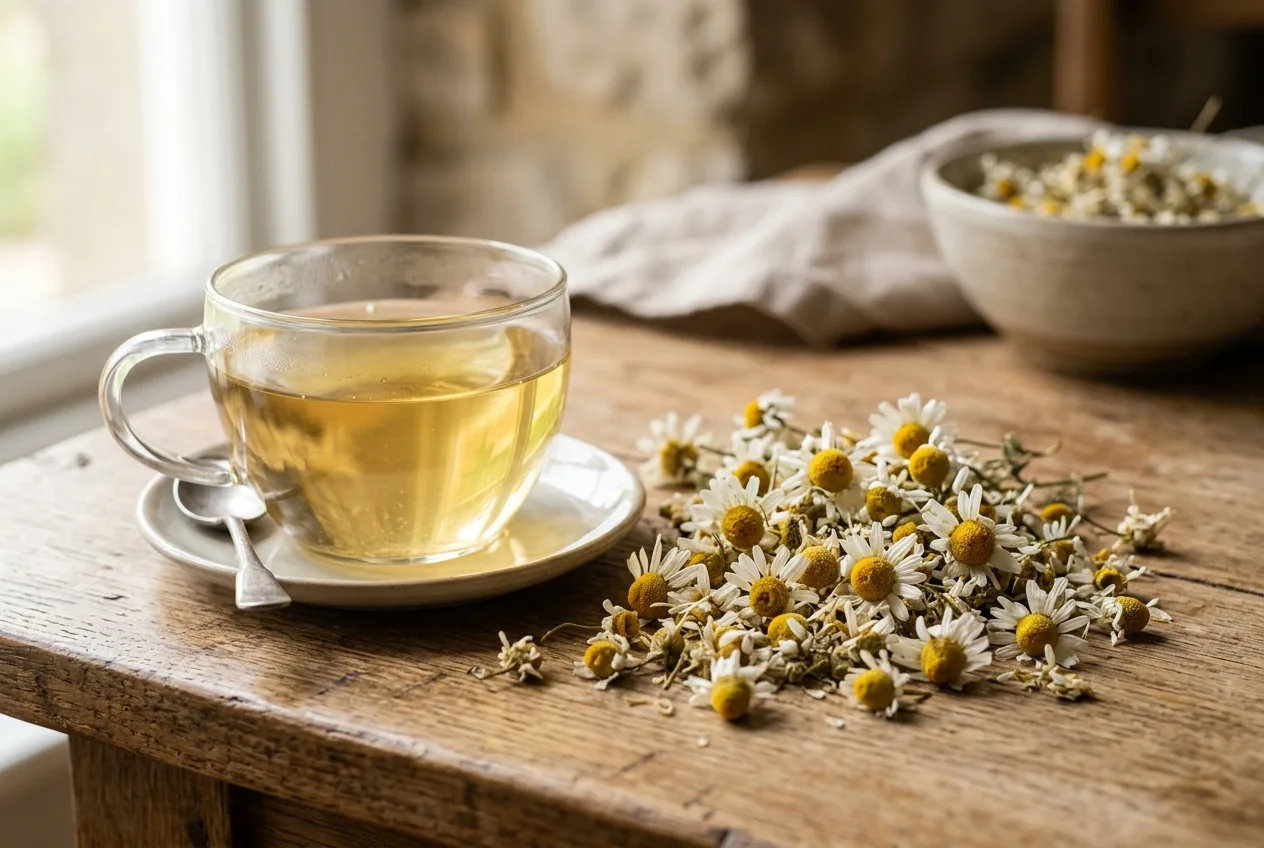
Figure 1: Standardized chamomile extract in clinical GAD trials versus ordinary chamomile tea as a soothing daily beverage.
Tea and Extract Are Not Interchangeable
This is the practical point readers should remember. A standardized capsule has a measured dose. A cup of tea varies with flower quantity, brewing time, water, and plant material.
The evidence therefore supports a carefully worded statement: chamomile extract has been studied in GAD, and some trials reported improvements in anxiety symptoms. It does not establish ordinary chamomile tea as a treatment for an anxiety disorder.
What Tea Can Reasonably Do
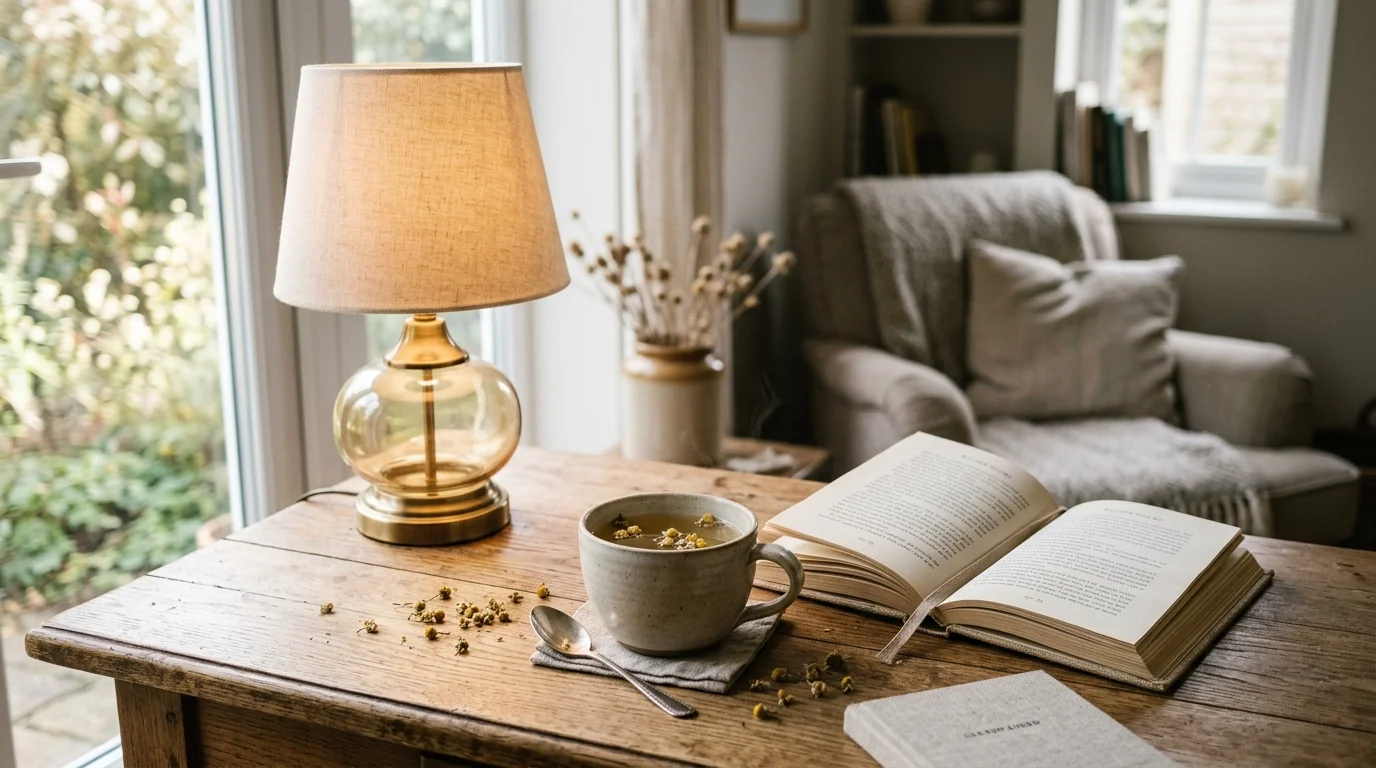
A caffeine-free herbal drink can still fit into a calmer routine. It may be the drink someone chooses after work, while reading, or during a quiet evening. Older Indian food coverage from 2017 also framed chamomile around relaxation and reduced stress. [6][7]
Those are reasonable descriptions of how people use the beverage. They should not be confused with clinical efficacy claims. Discover our full research summary on what chamomile tea is good for across digestion, relaxation, and wellness.
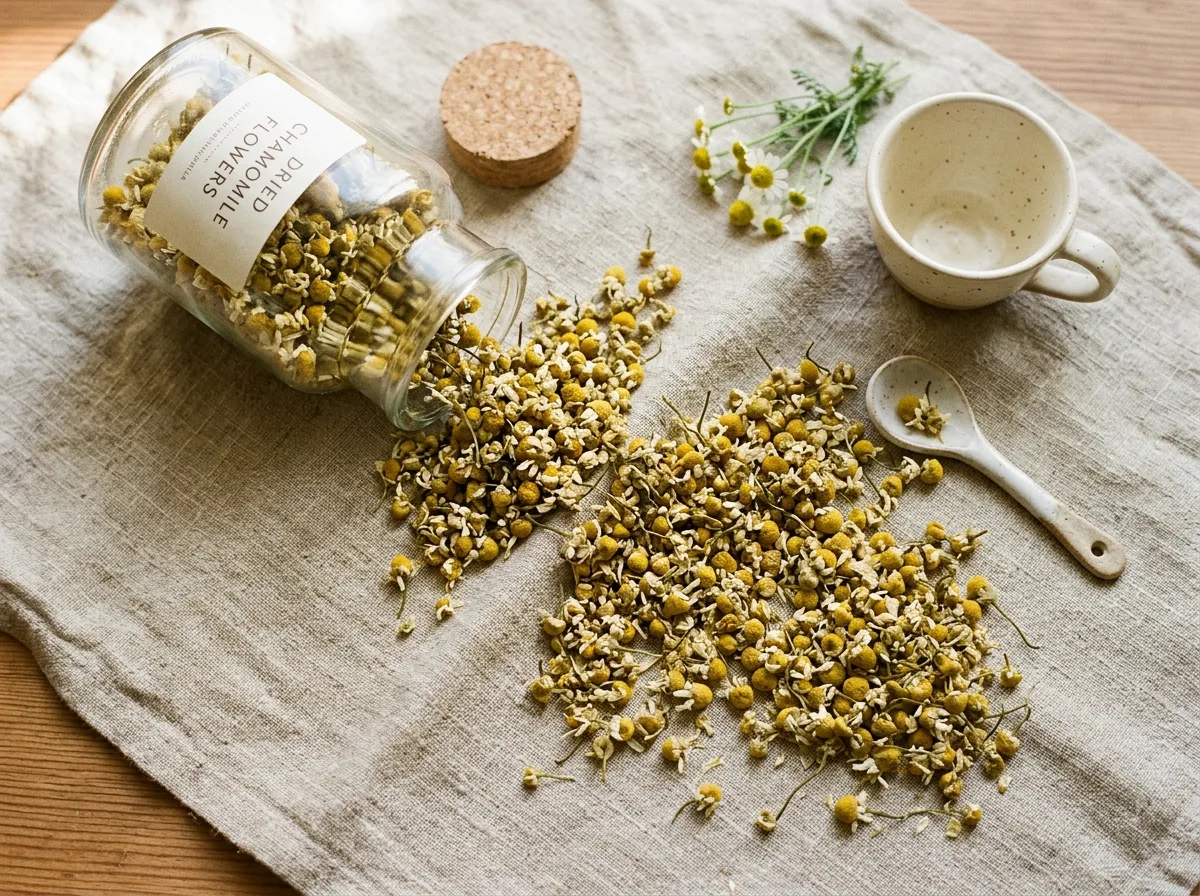
A Calming Daily Tea Ritual
Taking 10 minutes to brew fragrant whole chamomile blossoms offers a sensorial pause in a busy day. Pure, soothing, and 100% caffeine-free with no bitter tea dust.
When Anxiety Needs More Than a Drink
If anxiety is persistent, difficult to control, causes major distress, or interferes with work, relationships, or sleep, professional care matters. Chamomile should not delay assessment or replace prescribed treatment.
Safety
NCCIH notes that chamomile can cause allergic reactions and may interact with medicines. People taking regular medication should check before using concentrated chamomile, and the same caution applies during pregnancy or breastfeeding because safety information is limited. [8] Review our comprehensive health guide on chamomile tea benefits, uses, and safety for complete interactions and guidance.
Historical Source Set Used for This Article
- Amsterdam JD et al., 2009 — Journal of Clinical Psychopharmacology: randomized, double-blind trial of chamomile extract for GAD. PubMed: 19593179 ↗
- Mao JJ et al., 2016 — Phytomedicine: long-term chamomile treatment for generalized anxiety disorder. PubMed: 27912875 ↗
- Keefe JR et al., 2016 — Phytomedicine: short-term open-label chamomile therapy for GAD. PubMed: 27912871 ↗
- Mao JJ et al., 2017 — Journal of Alternative and Complementary Medicine: treatment-expectancy study in chamomile GAD research. PubMed: 28394645 ↗
- Keefe JR et al., 2017 — Phytomedicine: salivary cortisol during chamomile extract therapy. PubMed: 29157832 ↗
- NDTV Food, 2017 — chamomile tea, stress/anxiety, digestion and skin. NDTV Food ↗
- NDTV Food, 2017 — herbal teas to calm the mind and relieve stress. NDTV Food ↗
- NCCIH (NIH), 2020 — “Anxiety and Complementary Health Approaches.” NIH NCCIH ↗