A warm cup of chamomile tea can be a perfectly sensible drink. The harder question is what, exactly, makes it "healthy."
The answer depends on what we mean by healthy. If the question is whether pure chamomile is a caffeine-free herbal beverage, yes. If the question is whether drinking it prevents disease, improves sleep, lowers blood sugar, or treats anxiety, the answer needs more qualification. Chamomile has a long history of use and a growing research literature, but human evidence is uneven and many studies use extracts rather than an ordinary cup of tea. [1]
That difference is easy to lose in a long list of "benefits." It is also the difference between a useful health article and a misleading one. To see how chamomile compares across specific everyday uses, explore our companion guides on what chamomile tea is good for and whether chamomile tea makes you sleepy.
What Is in Chamomile Tea?
Chamomile is not one of the true tea plants. Pure chamomile tea is made by steeping dried chamomile flowers, most commonly German chamomile, in hot water. German chamomile is identified by botanical names including Matricaria chamomilla, Matricaria recutita, and Chamomilla recutita. Roman chamomile (Chamaemelum nobile) is a different species. [1] Read our foundational guide on what chamomile tea is for more on plant varieties.
The flowers contain naturally occurring plant compounds, including flavonoids and volatile constituents. Apigenin is one of the flavonoids that has received particular attention in scientific research. [2]
That chemistry is interesting, but chemistry alone does not tell us what a person gets from a mug of tea. A laboratory experiment can show that a compound has biological activity. A clinical trial asks a different question: what happened to people who actually consumed a particular preparation?
For this reason, it is useful to keep the cup in view rather than treating every study of chamomile as though it were a study of chamomile tea.
One Clear Advantage: It Is Naturally Caffeine-Free
This is probably the easiest health-related point to make without stretching the evidence.
Because pure chamomile is an herbal infusion rather than a beverage made from Camellia sinensis (the plant behind black, green, white, and oolong tea), it is naturally 100% caffeine-free. [3]
That does not make the tea a medicine. It does give it a practical place in a balanced diet. Someone who wants a hot drink late in the day can use chamomile without adding caffeine to the evening. The same is true for someone who simply prefers to limit caffeine. And unlike many sweetened drinks, plain chamomile tea does not need sugar to be enjoyable as a beverage.
The product still matters. A "chamomile blend" may contain other tea leaves or botanicals, so the ingredient list is the quickest way to tell what is actually in the cup. Choosing 100% pure whole dried chamomile flowers guarantees an unadulterated, caffeine-free infusion.
What Does the Research Say About Sleep?
Sleep is probably the reason chamomile tea has become so closely associated with bedtime. The research is more complicated than the reputation suggests.
NCCIH says there is very little information on chamomile's effect on insomnia. A 2019 review found one study in people with insomnia and reported no clear benefit for the disorder itself. [1][4]
More recent research paints a slightly different picture. A 2024 systematic review and meta-analysis of clinical trials concluded that chamomile may improve some measures of sleep, although the authors noted differences among the studies and the need for better trials. [5]
That is an important distinction: a person may find chamomile pleasant as part of an evening routine. That is not the same as showing that an ordinary cup treats chronic insomnia. If someone is routinely unable to fall asleep, wakes repeatedly, or feels impaired during the day because of poor sleep, the underlying sleep problem deserves medical attention rather than being left to herbal tea alone. For the complete clinical trial breakdown, read our in-depth guide on whether chamomile tea makes you sleepy.
Anxiety Is Promising, but the Evidence Is Not Settled
Chamomile has also been studied for anxiety. A 2024 systematic review of clinical trials found that most of the included studies reported reductions in anxiety after oral chamomile use. [6] Earlier randomized trials have also examined chamomile extract in people with generalized anxiety disorder. NCCIH describes these results as preliminary rather than conclusive. [7]
Here again, the preparation matters.
A trial of a standardized chamomile extract is not the same thing as a trial of one cup of home-brewed tea. The dose, extraction method, and amount of active constituents may all differ. So it is reasonable to say that chamomile is being investigated for anxiety and that some human studies are encouraging. It is not reasonable to market chamomile tea as a proven treatment for an anxiety disorder.
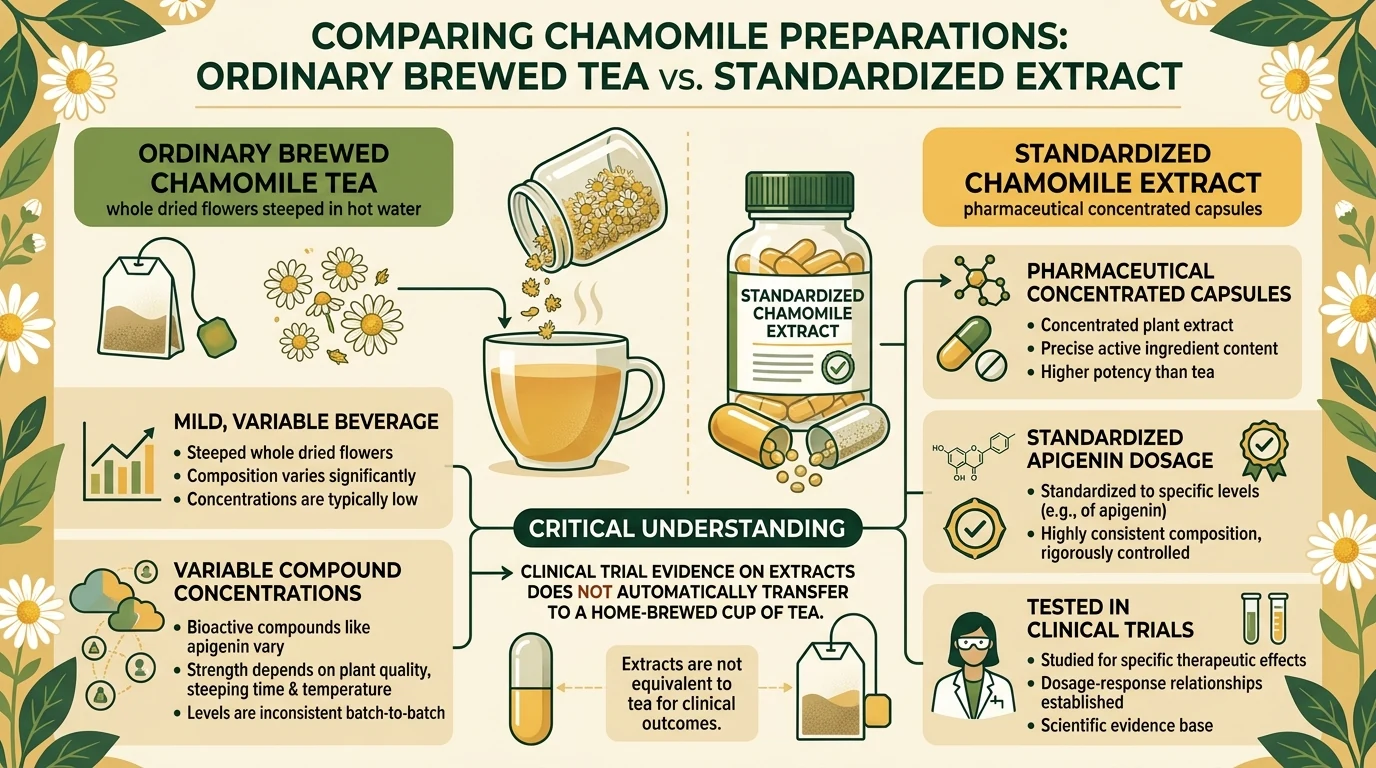
Figure 1: Understanding preparation differences — brewed whole flowers vs. standardized pharmaceutical extracts.
What About Digestion?
Chamomile has been used traditionally for digestive complaints, including indigestion and stomach discomfort. [1] That history explains why a cup after a meal feels like such a familiar recommendation. Yet traditional use and clinical evidence are different categories.
NCCIH says studies of chamomile for specific digestive conditions have not produced sufficient reliable evidence to establish clinical usefulness. Some studies also use combinations of chamomile with other herbs, making it hard to separate chamomile's contribution from the rest of the formula. [1]
That means a reasonable claim is that chamomile tea is a traditional herbal drink often enjoyed after meals. A much stronger claim—that it treats reflux, gastritis, IBS, ulcers, or other digestive disease—needs evidence that an ordinary cup of tea has actually been tested for that purpose. Persistent digestive symptoms deserve medical evaluation.
Does Chamomile Affect Blood Sugar?
This is one area where human evidence is more interesting than many casual articles suggest.
A 2016 randomized trial involved 64 people with type 2 diabetes. The group receiving chamomile tea consumed 3 grams of chamomile in 150 mL of hot water three times a day after meals for eight weeks. The researchers reported improvements in several glycemic and antioxidant measures compared with the control group. [8]
A later systematic review and meta-analysis included four human clinical trials and found favorable effects on fasting blood glucose and HbA1c, while also noting that more randomized trials are needed to confirm the findings. [9]
Those results are worth reporting. They still do not justify telling someone with diabetes to use chamomile instead of prescribed treatment. There is another issue: the amount used in a research protocol is not necessarily the same as a typical home serving. The 2016 study, for example, used a defined amount three times daily. That is quite different from saying "drink chamomile whenever you like." For anyone taking glucose-lowering medication, adding a concentrated herbal routine should be discussed with a healthcare professional.
What About Heart Health and Cholesterol?
This is where internet benefit lists often get ahead of the evidence. There is laboratory and animal research into chamomile's antioxidant, anti-inflammatory, lipid-related, and other biological effects. Older reviews describe several promising mechanisms. [2][10]
But a plausible mechanism is not the same as a clinical outcome. A study can show that chamomile compounds interact with a pathway in cells. That tells researchers something about the plant. It does not prove that drinking chamomile tea prevents a heart attack or lowers cardiovascular risk in the general population. At present, it is better to describe these areas as research questions than as established health benefits.
Is Chamomile Tea a Source of Antioxidants?
Chamomile flowers contain phenolic compounds, including flavonoids, that have antioxidant activity in laboratory settings. [2][10] That statement is accurate as far as it goes.
The trouble starts when "contains antioxidant compounds" becomes "protects your body from disease." Food chemistry does not work that simply. The amount extracted into a cup, what happens during digestion, and whether the resulting exposure changes a meaningful health outcome are separate questions. For readers, the useful takeaway is modest: chamomile contains naturally occurring plant compounds that researchers are interested in. That is not the same as proving a preventive effect from drinking the tea.
Is Chamomile Tea Good for Weight Loss?
Chamomile tea should not be sold as a weight-loss drink. Plain chamomile is naturally caffeine-free and can be a low-energy beverage when consumed without large amounts of sugar, honey, cream, or sweetened syrups. That can make it an ordinary part of a calorie-conscious diet.
But there is no good reason to describe chamomile itself as a fat burner. Weight change depends on overall energy intake, physical activity, sleep, medications, and health conditions. A cup of herbal tea does not override those basics.
What About Skin and Inflammation?
Chamomile is used not only as a drink but also in topical preparations. Some small studies have investigated chamomile-containing products for skin or oral applications. [1]
The route matters. A cream applied to the skin is not the same intervention as drinking tea. A mouth rinse is not the same as either one. Evidence from a topical product should therefore not be presented as evidence that drinking chamomile tea will produce the same result. This is one of the simplest checks a reader can make when encountering a health claim: Was the product actually studied in the form being recommended?
The Health Value of a Cup Depends on What You Put in It
Chamomile tea itself is a simple beverage. The rest of the cup can change its nutritional profile. Plain brewed chamomile has very little energy. Add two teaspoons of sugar, honey, a sweetened creamer, or a large flavored syrup and the drink is no longer nutritionally identical.
This is not a warning about those ingredients; it is simply a reminder that "chamomile tea" can describe very different drinks. The same applies to blends. A product containing chamomile, black tea, green tea, spices, sweeteners, or other botanicals needs to be judged by its full ingredient list, not by the word "chamomile" on the front.
Who Should Be Cautious?
NCCIH says chamomile is likely safe when consumed orally in amounts commonly found in teas and foods. That does not mean reactions are impossible. [1]
People allergic to ragweed, chrysanthemums, marigolds, daisies, or other members of the Asteraceae family may be more likely to react to chamomile. Reported reactions include skin irritation and, in rare cases, severe allergic reactions. [1]
Drug interactions are another reason for caution. Chamomile may interact with warfarin and possibly with medicines metabolized by the liver. The evidence is not equally strong for every interaction, so people taking regular medication should ask a healthcare professional before making concentrated or frequent herbal use part of their routine. [1] Pregnancy and breastfeeding deserve particular care because there is limited safety information. [1] For a detailed analysis, consult our comprehensive pillar guide on chamomile tea benefits, uses, and safety.
So, Is Chamomile Tea Healthy?
For most people, it is reasonable to think of plain chamomile tea as a caffeine-free herbal beverage that can fit easily into a normal, balanced diet.
Beyond that basic point, the answer becomes more specific. There is human research into chamomile and sleep, anxiety, blood sugar and other outcomes. Some findings are encouraging. Some are inconclusive. Some studies use concentrated extracts rather than tea. Others are too small to support broad recommendations. NCCIH's overall assessment is appropriately cautious: reliable evidence is still insufficient to establish clinical usefulness across many specific conditions. [1]
That does not make chamomile uninteresting; it makes the questions more precise. If the goal is a caffeine-free drink, chamomile fits the bill. If the goal is treating a medical condition, the evidence for that particular condition—and the exact form of chamomile being studied—should be checked before making the leap from "promising plant" to "proven treatment."
Looking for pure, whole-flower chamomile?
Experience authentic German chamomile flowers, handpicked and gently dried with zero additives.
Frequently Asked Questions
Can I drink chamomile tea every day?
For most adults, chamomile is likely safe in amounts commonly found in foods and teas. People with allergies, medication use, pregnancy, breastfeeding, or other health concerns should get individualized advice before making regular use a habit. [1]
Is chamomile tea better than coffee?
That depends on what you want from the drink. Chamomile is naturally caffeine-free, while coffee contains caffeine. The two serve different purposes.
Is chamomile tea good for sleep?
Chamomile is commonly used at bedtime, and some clinical research suggests possible improvements in sleep measures. Evidence for treating insomnia specifically is limited. [1][5]
Does chamomile tea lower blood sugar?
Some clinical studies have reported improvements in blood-glucose markers, but the evidence is not strong enough to treat chamomile tea as a substitute for diabetes care. [8][9]
Does chamomile tea help anxiety?
Several studies have investigated chamomile, particularly standardized extracts, and some found improvements in anxiety symptoms. NCCIH describes the evidence as preliminary rather than conclusive. [7]
Does chamomile tea have calories?
Plain brewed chamomile tea contributes very little energy (virtually zero calories). Sweeteners and other additions change the total.
What is the healthiest way to drink chamomile tea?
There is no special "healthiest" recipe. A plain cup keeps the drink simple and caffeine-free. From there, the best preparation is one that tastes good without turning the tea into a heavily sweetened beverage.
The Practical Answer
Chamomile tea can be a healthy choice of beverage without being a miracle treatment.
That distinction is worth keeping. The plant contains interesting compounds. It has a long traditional history. Researchers have found enough promising signals to keep studying it. But the strongest claims should still wait for stronger evidence. For everyday use, its most straightforward advantages are its lack of caffeine and its simplicity. For sleep, anxiety, blood sugar, digestion, or any other medical concern, look at the specific evidence rather than the reputation of chamomile as a whole.
Evidence & Scientific Sources
- NCCIH — Chamomile: Usefulness and Safety — nccih.nih.gov/health/chamomile
- McKay DL, Blumberg JB. A review of the bioactivity and potential health benefits of chamomile tea. Phytother Res. 2006. — PubMed: 16628544
- NCCIH — Tea — nccih.nih.gov/health/tea
- NCCIH — Sleep Disorders and Complementary Health Approaches — nccih.nih.gov/health/sleep-disorders
- Kazemi A, et al. Effects of chamomile (Matricaria chamomilla L.) on sleep: systematic review and meta-analysis. Complement Ther Med. 2024. — PubMed: 39106912
- Saadatmand S, et al. The Effect of Oral Chamomile on Anxiety: A Systematic Review of Clinical Trials. Clinical Nutrition Research. 2024. — PubMed: 38784853
- NCCIH — Anxiety and Complementary Health Approaches: What the Science Says — NCCIH Clinical Digest
- Zemestani M, et al. Chamomile tea improves glycemic indices and antioxidants status in patients with type 2 diabetes mellitus. Nutrition. 2016. — PubMed: 26437613
- Effect of chamomile consumption on glycemic markers in humans and animals: systematic review and meta-analysis. 2024. — PubMed: 38932814
- Chamomile: A herbal medicine of the past with bright future. Mol Med Report. 2011. — PubMed: 21132119