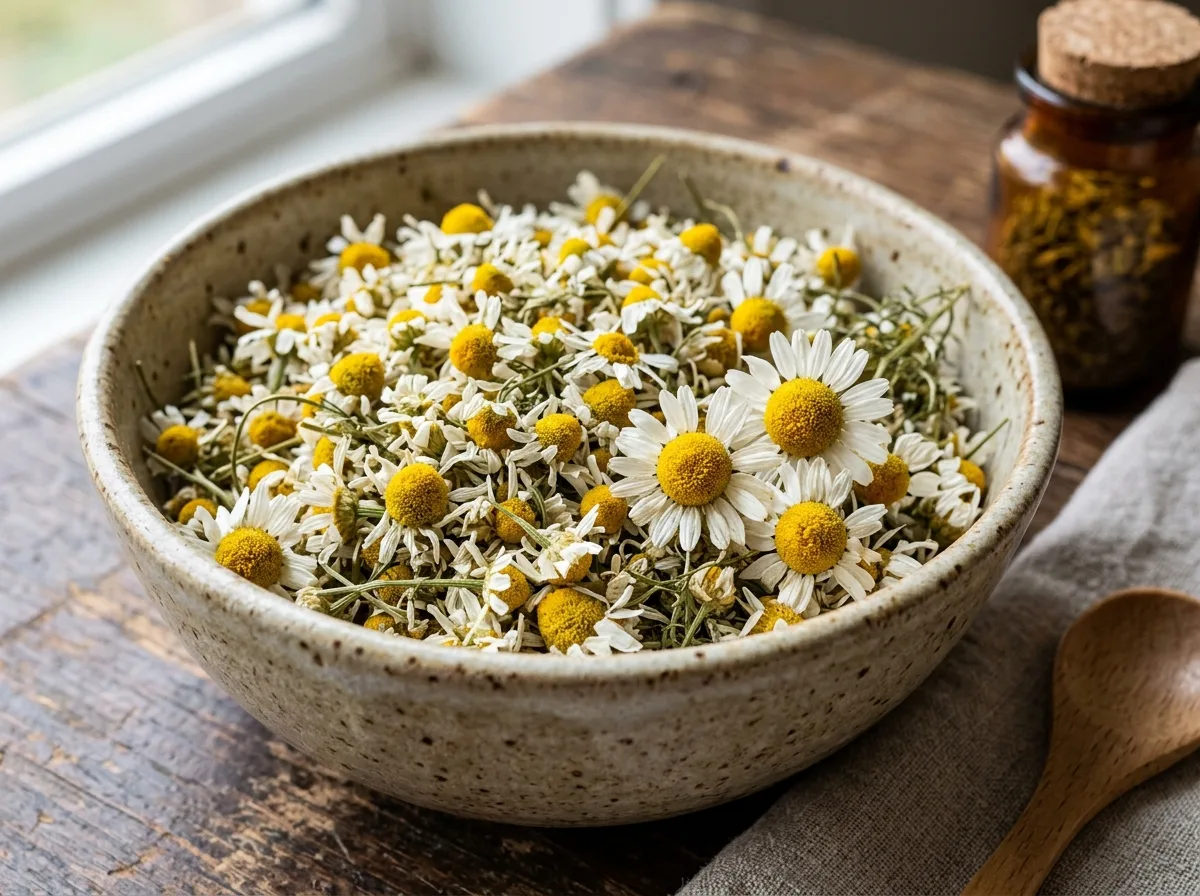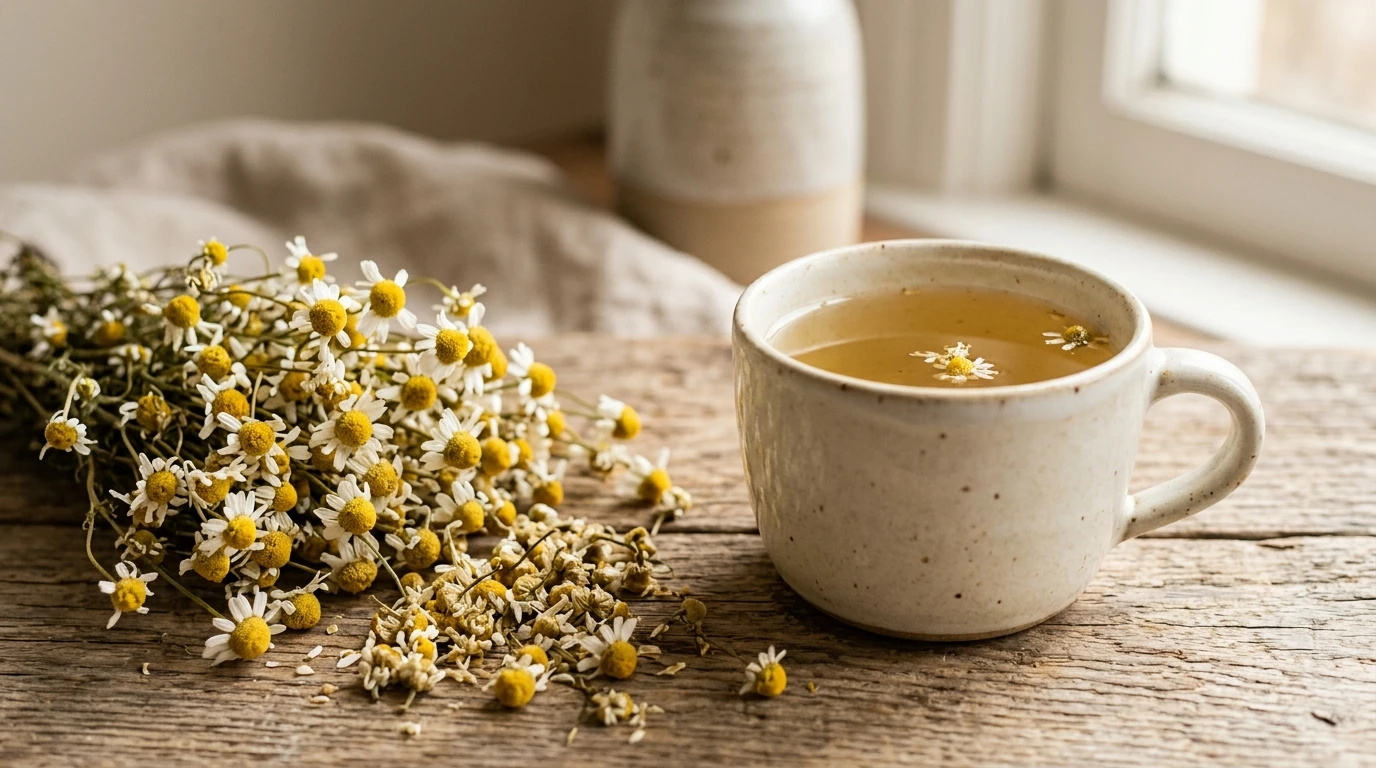
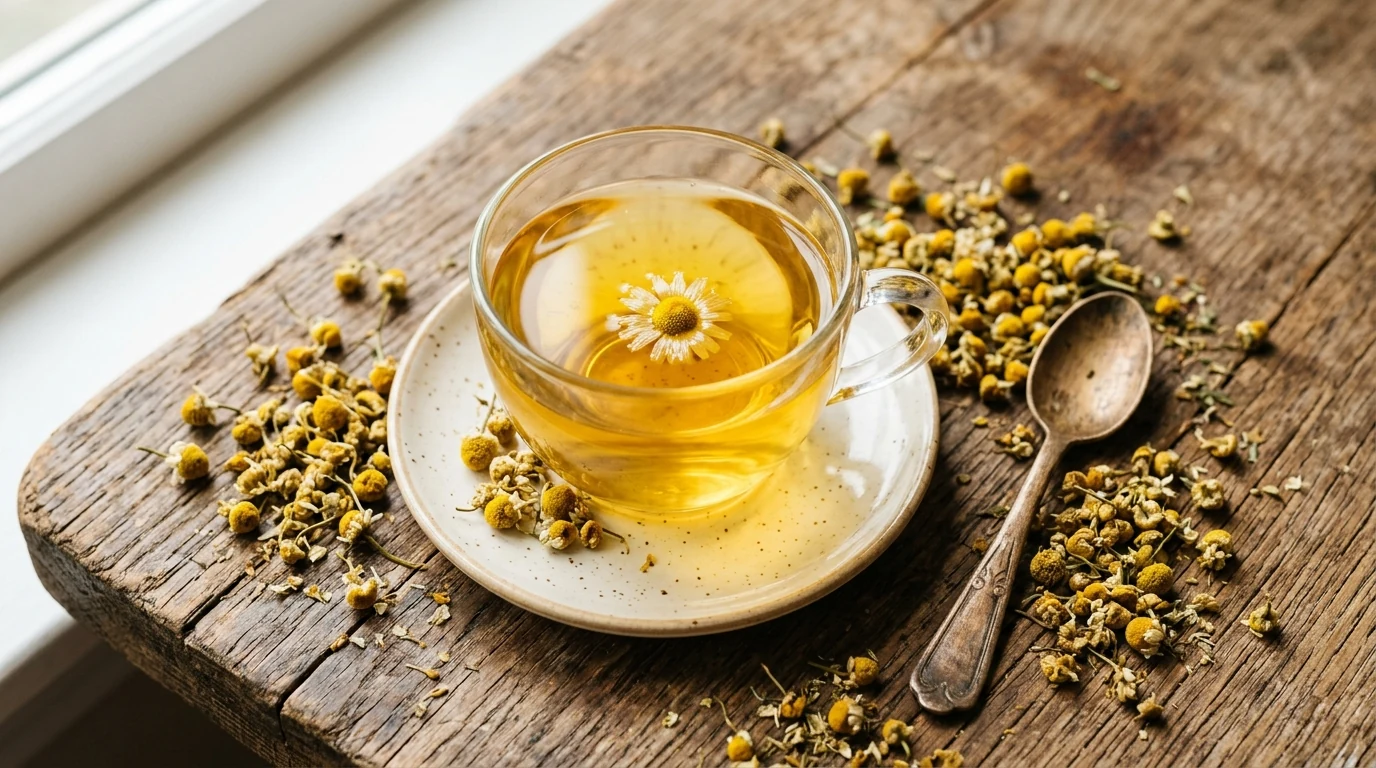
If someone asks what chamomile tea is good for, the honest answer is a little narrower than the usual wellness list suggests. Chamomile is a caffeine-free herbal drink with a long history of traditional use, especially around relaxation, digestive comfort and bedtime routines. Research has also examined chamomile for anxiety, sleep and several other conditions. But a study of chamomile is not automatically a study of an ordinary cup of tea, and the evidence is not strong enough to call the drink a treatment for most health problems. [1][2]
That distinction is useful because "good for" can mean several different things. It can mean a practical advantage of the drink, such as being caffeine-free. It can mean a traditional use, such as having it after a meal. Or it can mean a clinical effect that researchers have actually tested. Those are three different claims.
The Short Answer
For everyday use, chamomile tea is most straightforwardly useful as a caffeine-free herbal drink. People also commonly choose it as part of an evening routine because it is warm, mild and free of the caffeine found in black or green tea.
Research into chamomile has gone further. Clinical studies have looked at anxiety, sleep quality and other health questions, with some encouraging findings in particular areas. Still, much of that research involves chamomile extracts, combinations of herbs, or small studies. NCCIH says there is not enough reliable evidence to establish chamomile's clinical usefulness for a wide range of specific conditions. [1]
So the useful way to read the evidence is not "chamomile fixes everything." It is to ask which use has been studied, what form of chamomile was used, and what the researchers actually measured.
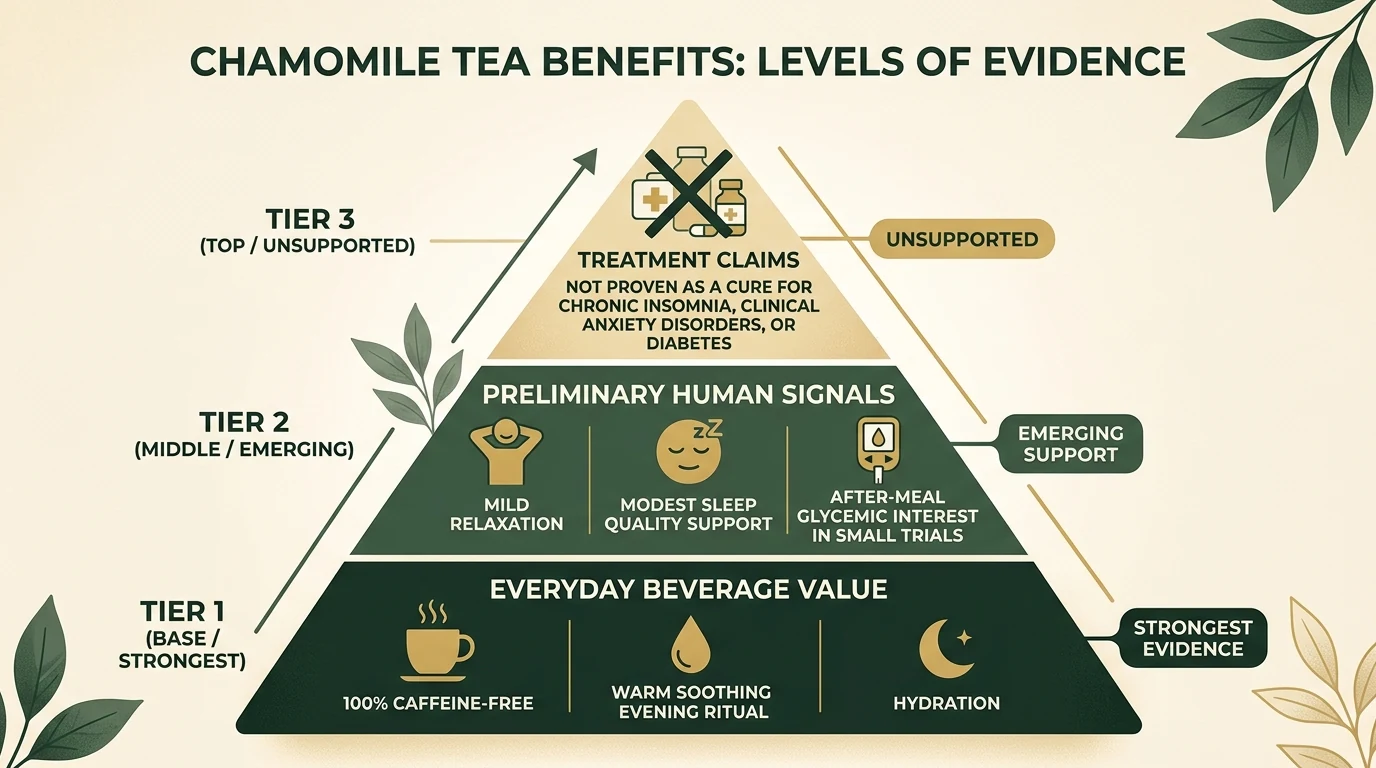
Figure 1: Chamomile Tea Benefits: 3-Tier Evidence Ladder (Everyday Beverage Value, Emerging Signals, and Unsupported Treatment Claims).
1. A Caffeine-Free Alternative to Tea and Coffee
This is the least complicated benefit.
Pure chamomile is an herbal infusion rather than tea made from Camellia sinensis, the plant used to make black, green, white and oolong teas. It is therefore naturally caffeine-free. [3]
That gives chamomile a practical place in the day. Someone who wants a hot drink in the evening, who is sensitive to caffeine, or who simply wants a break from coffee does not have to treat the cup as a health intervention. It is a beverage choice.
The same point is useful when comparing chamomile with "bedtime teas." If a blend contains black tea, green tea, matcha or another caffeinated ingredient, it is no longer the same thing as a pure chamomile infusion. Check the ingredient list rather than relying on the name on the front of the packet. For pure, whole-flower infusions, see our authentic whole dried chamomile flowers.
2. A Relaxing Part of an Evening Routine
Chamomile has a reputation for helping people unwind. That reputation is not entirely detached from research, but the strongest claims are easy to overstate.
A 2024 systematic review of 10 clinical trials found that nine reported reductions in anxiety with oral chamomile, although the review also noted that the mechanism is not well understood and the evidence base is still developing. [4] NCCIH is more cautious: it says preliminary studies suggest a chamomile dietary supplement might help generalized anxiety disorder, but the findings are not conclusive. [5]
There is an important detail here: these studies are not proof that one cup of chamomile tea will treat anxiety. For someone who simply wants a caffeine-free drink while winding down, though, chamomile can reasonably be part of a relaxing routine. The routine itself may matter: a familiar cup, fewer stimulants, dimmer lights and a pause before bed are different from claiming that chamomile acts like an anti-anxiety drug.
3. Sleep: Popular Use, Mixed Evidence
Sleep is probably the claim most closely associated with chamomile tea.
People have traditionally used chamomile for insomnia, often as a tea. Yet NCCIH notes that there is very little information on chamomile's effect on insomnia, and a 2019 review found one study of chamomile for insomnia that showed no benefit for the sleep disorder. [1][6]
A separate 2019 systematic review and meta-analysis of randomized and quasi-randomized trials found a significant improvement in sleep quality, but it also found very little evidence for insomnia itself. The researchers concluded that larger trials were needed. [7]
That leads to a useful distinction: sleep quality is not the same thing as treating insomnia.
A person may enjoy chamomile as part of a bedtime routine without that meaning the tea is a proven treatment for chronic insomnia. If someone regularly has difficulty falling asleep, staying asleep, or functioning during the day because of poor sleep, the sensible next step is to address the sleep problem itself rather than relying on tea. Our dedicated guide on whether chamomile tea makes you sleepy goes deeper into that evidence.
4. Digestive Comfort and After-Meal Use
Chamomile has a long traditional history of use for digestive complaints, which helps explain why it is often served after meals.
Modern evidence is less tidy. NCCIH lists indigestion among the conditions for which chamomile is promoted, but says studies across specific conditions have not produced sufficient reliable evidence to establish clinical usefulness. [1]
There is also an evidence problem that is easy to miss: some research involves mixtures containing chamomile plus other herbs. If a study finds a benefit from a multi-herb preparation, it is not possible to give chamomile alone all the credit. NCCIH specifically notes this difficulty. [1]
So "chamomile is a traditional after-meal drink" is a reasonable statement. "Chamomile tea treats digestive disease" is not. If someone has persistent abdominal pain, repeated vomiting, blood in the stool, unexplained weight loss, or ongoing digestive symptoms, a cup of tea should not be used as a substitute for medical evaluation.
5. Anxiety and Stress: Promising Research, but Know the Product Studied
Anxiety is another area where chamomile research is interesting enough to deserve attention.
A 2016 randomized controlled trial involving 179 people with moderate to severe generalized anxiety disorder found a clinically meaningful reduction in anxiety symptoms after eight weeks of chamomile extract. NCCIH also highlights a 2009 trial involving 57 people with mild to moderate generalized anxiety disorder, while stressing that the overall evidence remains preliminary. [5]
That wording matters: extract.
A concentrated chamomile supplement is not the same product as dried flowers steeped in hot water. Different preparations can deliver different amounts of active compounds, and a trial result cannot simply be transferred from one form to another. For ordinary tea drinking, the sensible claim is modest. Chamomile may fit into a calming routine, and research into chamomile extracts for anxiety is worth watching. It is not a replacement for professional care for an anxiety disorder.
6. What About Blood Sugar, Heart Health and Inflammation?
These claims appear frequently in chamomile marketing, but this is where a broad "benefits" article can easily become misleading.
There are laboratory studies, animal studies and human studies examining different chamomile preparations and outcomes such as blood glucose, blood lipids and inflammatory markers. But a biochemical effect in a laboratory or an encouraging result from a small clinical study is not the same as proving that ordinary chamomile tea prevents disease. For a thorough discussion on diet and metabolic markers, read our evaluation on whether chamomile tea is healthy.
NCCIH's overall assessment is deliberately restrained: there is not enough reliable evidence to rate chamomile's clinical usefulness for a wide range of specific conditions. [1]
That does not make the research uninteresting. It means the conclusion should match the research stage. A good rule is:
- Interesting research is worth reporting.
- Preliminary findings can be described as preliminary.
- Established treatment benefits require much stronger evidence.
Chamomile belongs in the first two categories more often than the third.
7. Chamomile Contains Plant Compounds, but That Does Not Make Every Claim True
Chamomile flowers contain flavonoids and other plant compounds that have been studied in laboratory and human research. Apigenin is one of the compounds most often discussed, particularly in research on the nervous system. [1][5]
It is tempting to make a straight line from chemistry to a health claim: chamomile contains apigenin, apigenin has biological activity, therefore drinking chamomile tea should produce a specific clinical benefit. Real evidence is rarely that simple.
The amount of a compound in a flower is not necessarily the amount that reaches the body after a normal cup of tea. Extraction method, temperature, steeping time, plant material and dose all matter. A laboratory finding can tell researchers that a compound is biologically interesting without showing that a person gets the same effect from an ordinary beverage.
This is why "rich in antioxidants" or "anti-inflammatory" is not, by itself, a useful answer to the question of what chamomile tea is good for. The useful question is whether a particular preparation has been tested in people for a particular outcome.
8. Mouth and Skin Uses Are Different from Drinking the Tea
Chamomile is also used in some topical products and mouth rinses. NCCIH notes that small studies have investigated chamomile-containing mouthwashes for irritation or swelling associated with certain cancer treatments. [1]
That should not be turned into "drinking chamomile tea treats mouth inflammation." The route of use matters. A mouthwash is designed to contact oral tissues. A topical cream or rinse is not the same intervention as drinking tea. This is a simple point, but it prevents a lot of herbal-health claims from being stretched beyond the evidence. The same caution applies to skin claims: research into topical chamomile does not automatically establish that drinking chamomile tea will produce the same effect on skin.
How to Get Practical Value from a Cup
If the goal is simply to enjoy chamomile as a drink, there is no need to turn the ritual into a complicated health protocol.
Start with the preparation instructions on the package. Whole flowers and tea bags can differ in how much plant material is used, so there is no universal amount that guarantees a particular health effect. Drink it for what it is: a caffeine-free herbal infusion that can replace a caffeinated drink or become part of a familiar evening routine. You can learn more about brewing techniques in our article on what chamomile tea is.
Adding sugar, honey or a sweetened syrup changes the nutritional picture, too. Someone choosing chamomile because they want a low-calorie beverage should keep the additions in mind.
And if a specific health problem is the reason for drinking chamomile, treat that as a separate question. "What is chamomile tea good for?" is broad; "Can chamomile help my insomnia?" or "Can I drink it with warfarin?" is much more specific. Those questions deserve their own evidence and safety checks.
What Chamomile Tea Is Not Proven to Do
A benefit article is more useful when it also draws a line around the common claims. There is not good evidence to present chamomile tea as a proven treatment for:
- Chronic insomnia
- Anxiety disorders
- Diabetes
- Acid reflux
- Inflammatory bowel disease (IBD)
- Infections
- Cancer
- Weight loss
Some of these subjects have been studied. That is different from saying chamomile tea treats them. The distinction is especially important when a study used an extract, a combination formula, a topical product, or an animal model rather than a normal cup of tea.
How Much of the Benefit Comes from the Tea Itself?
This is one of the most overlooked questions.
Research papers often use a specific preparation, dose and schedule. A person at home may steep a teaspoon of dried flowers for a few minutes. Those two situations are not necessarily comparable.
The plant species, flower quality, preparation, concentration and duration of use can all affect exposure. So a study result should be read as evidence about that study's intervention, not as a guarantee attached to every chamomile product on the market. This is also why a high-quality chamomile article should link readers to separate pages on preparation, caffeine, sleep, safety and product quality rather than collapsing all those subjects into one list of "benefits."
Who Should Be Cautious?
For most adults, chamomile is likely safe in amounts commonly found in foods and teas. But "natural" does not mean "risk-free." [1]
Allergy is the clearest concern. People who are allergic to ragweed, chrysanthemums, marigolds or daisies may be more likely to react to chamomile. Reported reactions range from mild symptoms to rare severe hypersensitivity reactions. [1]
Drug interactions are another reason to be careful. Interactions with warfarin and some medicines metabolized by the liver have been reported, and there are theoretical concerns about other drugs, including sedatives. [1][8]
NCCIH also says little is known about chamomile's safety during pregnancy or breastfeeding. Anyone who is pregnant, breastfeeding, taking regular medicines, or managing a health condition should discuss regular or concentrated herbal use with a healthcare professional. [1] For a fuller discussion, see our core pillar guide on chamomile tea benefits, uses, and safety.
So, What Is Chamomile Tea Actually Good For?
The answer depends on how narrowly we use the word "good."
For an everyday drink, chamomile is useful because it is naturally caffeine-free, mild, and easy to fit into an evening routine.
For health conditions, the picture is more cautious. Research has explored anxiety, sleep quality, digestive complaints and several other uses. Some results are encouraging, especially in studies of standardized chamomile extracts, but the evidence is not strong or consistent enough to turn ordinary chamomile tea into a general-purpose treatment. [1][4][7]
That may sound less exciting than a list of ten miracle benefits. It is also much more useful. A good cup of chamomile tea does not have to cure something to have a place in your day. It can simply be a pleasant herbal drink. And when there is a health question behind the cup, the right next step is to look at the evidence for that specific question rather than assuming every study about chamomile applies to the tea in the mug.
Pure whole chamomile flowers, zero fillers
Freshly packed whole German chamomile flower heads for an authentic, soothing brew.
Frequently Asked Questions
What are the proven benefits of chamomile tea?
Its clearest, most dependable benefit is as a 100% naturally caffeine-free, low-calorie hot beverage that supports a relaxing evening routine. Clinical trials suggest modest benefits for sleep quality and anxiety symptoms, particularly with standardized extracts, but it is not a proven medical treatment.
Can chamomile tea cure insomnia or anxiety?
No. While chamomile has a long reputation for helping people relax and clinical trials show preliminary benefits for anxiety and sleep quality, clinical trials have not demonstrated that chamomile cures or treats chronic insomnia or anxiety disorders.
Is it good to drink chamomile tea after meals?
Yes, chamomile has a long tradition of use as an after-dinner beverage for soothing digestive comfort. However, it should not be treated as a clinical cure for gastrointestinal diseases such as ulcers, gastritis, or acid reflux.
Does chamomile tea help with weight loss?
Chamomile tea contains virtually zero calories when brewed plain, making it a great replacement for sugary sodas or high-calorie drinks, but it does not act as a metabolic fat burner.
Evidence & Scientific Sources
- [1] National Center for Complementary and Integrative Health (NCCIH), "Chamomile: Usefulness and Safety." — nccih.nih.gov/health/chamomile
- [2] NCCIH, "5 Myths About Popular Natural Products Marketed for Disease Prevention and Wellness." — NCCIH Myths Guide
- [3] NCCIH, "Tea." — nccih.nih.gov/health/tea
- [4] Saadatmand S, Zohroudi F, Tangestani H. "The Effect of Oral Chamomile on Anxiety: A Systematic Review of Clinical Trials." Clinical Nutrition Research. 2024. — PubMed: 38784853
- [5] NCCIH, "Anxiety and Complementary Health Approaches: What the Science Says." — NCCIH Clinical Digest
- [6] NCCIH, "Sleep Disorders and Complementary Health Approaches: Usefulness and Safety." — NCCIH Sleep Disorders
- [7] Adib-Hajbaghery M, et al. "Therapeutic efficacy and safety of chamomile for state anxiety, generalized anxiety disorder, insomnia, and sleep quality: A systematic review and meta-analysis..." 2019. — PubMed: 31006899
- [8] NCCIH, "Herb-Drug Interactions: What the Science Says." — NCCIH Herb-Drug Guide